
Quick answer
Venice food is lagoon seafood: baccalà mantecato (whipped dried cod), sarde in saor (sardines in sweet and sour onions), bigoli in salsa, cuttlefish in its black ink with polenta, plus fegato alla veneziana, calf’s liver with onions. Eat them as cicchetti at a bacaro counter for €3 to €5 a bite, or as full plates for €16 to €18 at an osteria. On your first evening, a cicchetti and wine tour shows you how to order.
Prices checked on 14 November 2026, on the menus of the places named.
Book a cicchetti and wine tour See the Venice street food tourVenetian cooking is different from the Italian food most Americans know. The city lived on its lagoon and on trade, so the classics are small fish and shellfish, dried cod from the North Sea, onions cooked slowly with vinegar, rice, and polenta in place of bread. This guide explains the dishes. For where to book dinner, see our best restaurants in Venice, and for the bars, the cicchetti and bacari guide.
Venetian food at a glance
| Dish | What it is | When | Where to try it |
|---|---|---|---|
| Baccalà mantecato | Dried cod whipped with olive oil, on bread or polenta | All year | Bacari, osterie |
| Sarde in saor | Fried sardines marinated with onions and vinegar | All year; Redentore in July | Bacari, osterie |
| Seppie in nero | Cuttlefish cooked in its black ink, with polenta | All year | Osterie, trattorie |
| Bigoli in salsa | Thick pasta with a sauce of onions and anchovies | All year | Osterie |
| Risi e bisi | Rice and peas, between a soup and a risotto | Spring; 25 April | Trattorie |
| Fegato alla veneziana | Calf’s liver cooked with onions, with polenta | All year | Osterie, trattorie |
| Fritto misto | Mixed fried fish and seafood | All year | Osterie, takeaway cones |
| Risotto di gò | Risotto made with goby, a small lagoon fish | All year | Burano |
| Moeche | Soft-shell crabs, fried whole | Spring and fall | Seafood trattorie |
| Castraure | The first baby artichokes of Sant’Erasmo | Late April to early June | Trattorie, market |
| Fritole and galani | Fried dough balls and fried pastry ribbons | Carnival | Pastry shops |
| Tiramisù | Coffee, mascarpone and ladyfinger dessert | All year | Most menus |
| Spritz | Prosecco, a bitter and soda | All year | Every bar |
| Ombra | A small glass of house wine | All year | Bacari |
Seafood dishes to try first
Fish is the base of Venetian cooking. If you only have one meal, order a seafood starter and a pasta or a cuttlefish main.
The easiest place to taste several classics at once is Cantina Do SpadeMap, Calle Do Spade, San Polo 859, an osteria by the Rialto marketMap that calls itself famous for its fried cicchetti at the counter. Its dining room menu reads like the list below: baccalà mantecato with polenta €16, sarde in saor €17, spaghetti in squid ink €17, bigoli in salsa €16, fegato alla veneziana €17, cuttlefish in black ink with polenta €18, fried fish €22. The room is old, busy and informal, and it is open every day, 10am to 3pm and 6 to 10pm. Book a table by phone for dinner; the counter needs no booking.
Baccalà mantecato
Dried cod (stockfish) is soaked for days, boiled and beaten with olive oil until it turns into a white cream. Venetians spread it on a slice of bread or on grilled polenta. It is the cicchetto to try if you try only one, and at the counter it costs a few euros a piece.
Sarde in saor
Sardines are floured, fried and layered with onions cooked in vinegar, sometimes with raisins and pine nuts. The sweet and sour marinade was a way to keep fish for days at sea. Venetians eat it all year, and above all at the Redentore, the July festival with fireworks over the basin of St. Mark’s, which falls on Saturday 17 July in 2027.
Seppie in nero, and pasta in squid ink
Cuttlefish is stewed in its own ink, so the sauce comes out black, and served with soft white polenta. The same ink goes into spaghetti or risotto al nero. Order it with someone you know well: it turns your teeth black for a while.
Fritto misto and polenta e schie
Fritto misto is a plate of small fried fish, squid and shrimp. Fried-fish takeaways sell it in a paper cone, the scartosso, which you eat walking. Polenta e schie are lagoon shrimp, so small you eat them whole, on a spoonful of soft polenta.
Risotto di gò on Burano
Gò is the Venetian name for the goby, a small and bony lagoon fish that is boiled into a broth for risotto. It is the dish that made Trattoria da RomanoMap on Burano famous, a family trattoria at Via Baldassarre Galuppi 221 whose rooms are hung with paintings left by artists who ate there. It closes on Tuesday. Our Burano guide has the boat times and the other places to eat on the island.
Pasta, rice and meat: bigoli, risi e bisi, fegato
Bigoli are long, thick strands of pasta, often made with whole wheat flour. In salsa means with a sauce of onions cooked down with salted anchovies or sardines until they melt. It was a dish for meatless days such as Christmas Eve and Good Friday, and today you find it on menus all year.
Risi e bisi is rice cooked with young peas until it sits halfway between a thick soup and a loose risotto. By tradition it was served to the Doge on 25 April, the feast of St. Mark, and Venetians still eat it that day. It is a spring dish, best when the peas are fresh.
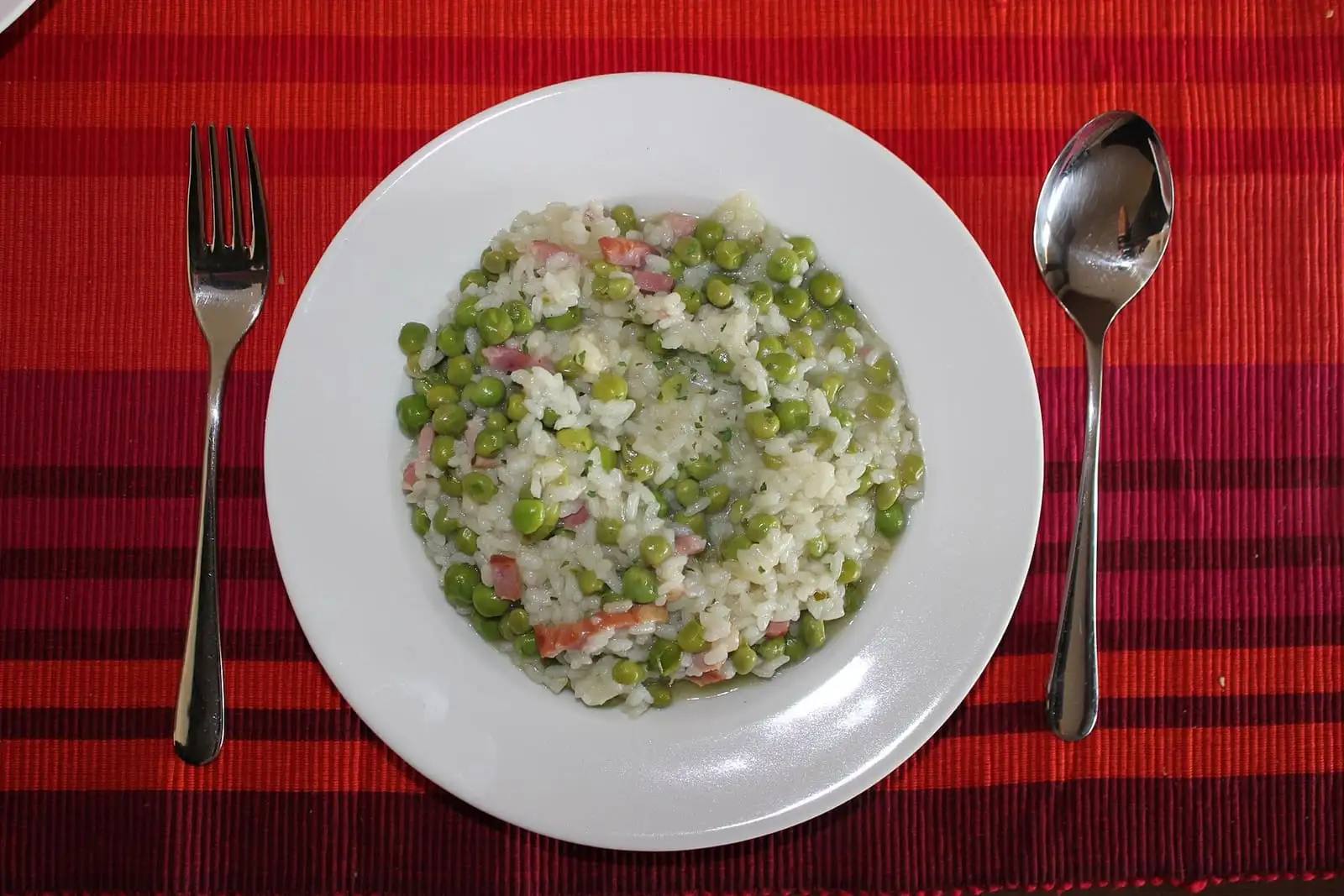

Risi e bisi, rice and peas cooked until loose, the dish of 25 April in Venice.
Fegato alla veneziana is the meat classic: thin strips of calf’s liver cooked fast with a lot of slowly softened onions, served with polenta. If you have never liked liver, the onions make this the version to try.
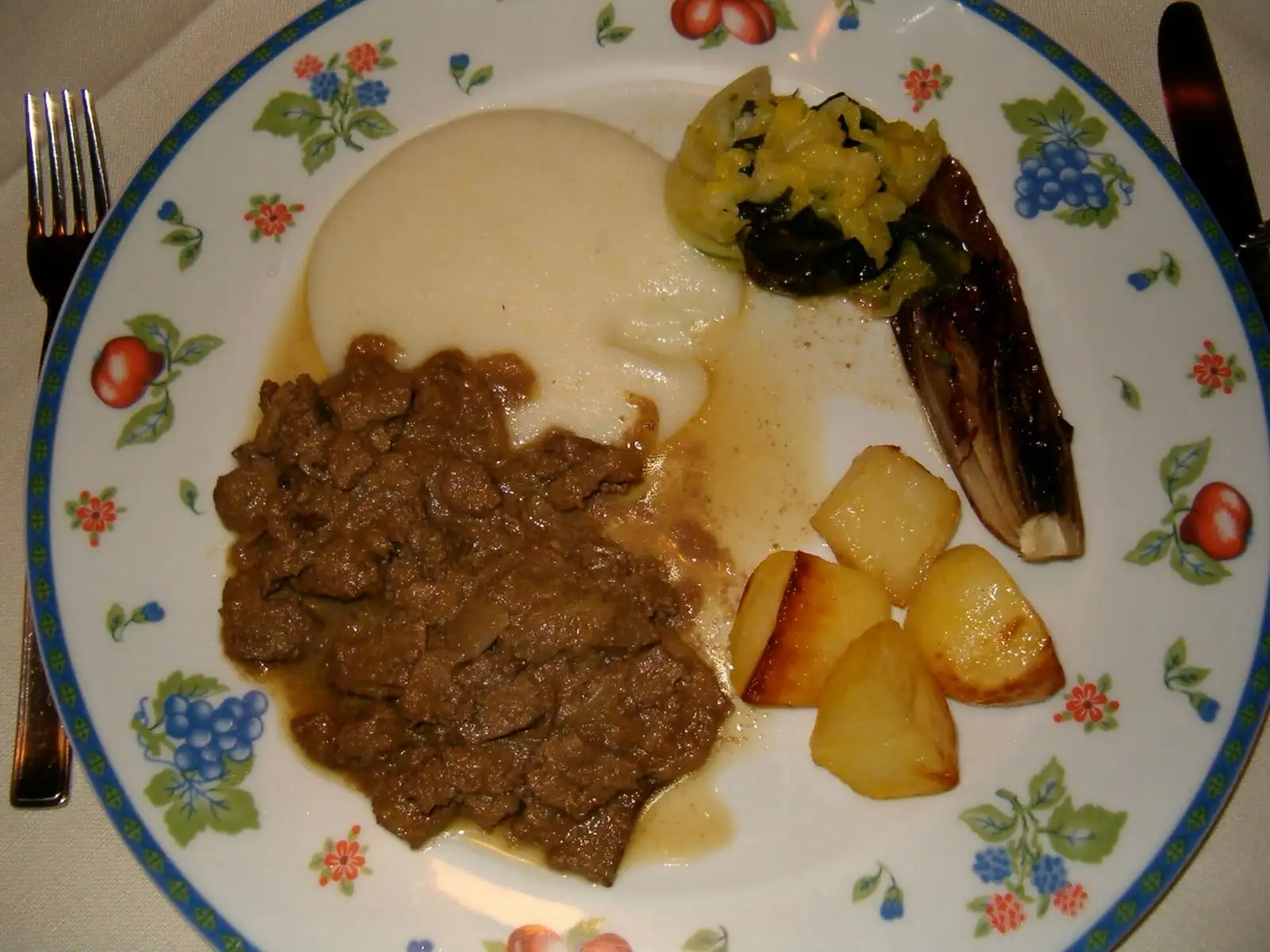

Fegato alla veneziana, calf's liver with onions, served with white polenta.
Trattoria Antiche CarampaneMap, Rio Terà de le Carampane, San Polo 1911, lists both cuttlefish in black ink with soft white polenta and liver with grilled polenta. It is a family trattoria tucked into a quiet corner near the Rialto market, easy to miss on the first try, where regulars and visitors who booked ahead fill a small, busy room. It closes on Sunday and Monday, so book ahead for dinner.
Seasonal food: what to eat in Venice, month by month
Venetian cooking follows the lagoon and the vegetable islands, and some dishes belong to a feast day. This is the calendar for the next twelve months.
| When | What to eat | Why |
|---|---|---|
| 21 November 2026 | Castradina, a soup of smoked mutton and cabbage | Festa della Salute |
| 23 January to 9 February 2027 | Fritole and galani | Carnival |
| 25 April 2027 | Risi e bisi | Feast of St. Mark |
| Late April to early June | Castraure and Sant’Erasmo artichokes | First harvest of the season |
| Spring, then again in fall | Moeche | Molting season of the lagoon crabs |
| 17 July 2027 | Sarde in saor | Redentore night |
| 11 November 2027 | Dolce di San Martino, a shortbread horse and rider covered in icing and candies | St. Martin’s Day |
Moeche, soft-shell crabs
Moeche are the green crabs of the lagoon, caught in the few days when they shed their shell and are still soft. They are fried whole, legs and all, and eaten in a couple of bites. The season comes twice, in spring and in fall, and lasts only a few weeks each time. Antiche Carampane serves fried moeche in season; at other seafood trattorie, ask the waiter on the day.
Castraure, the first artichokes
The island of Sant’Erasmo, in the northern lagoon, grows a dark purple artichoke protected as a Slow Food Presidium. Castraure are the first buds cut from each plant, small and tender enough to eat raw. Fresh Sant’Erasmo artichokes are available from the end of April to early June, and the castraure come first.
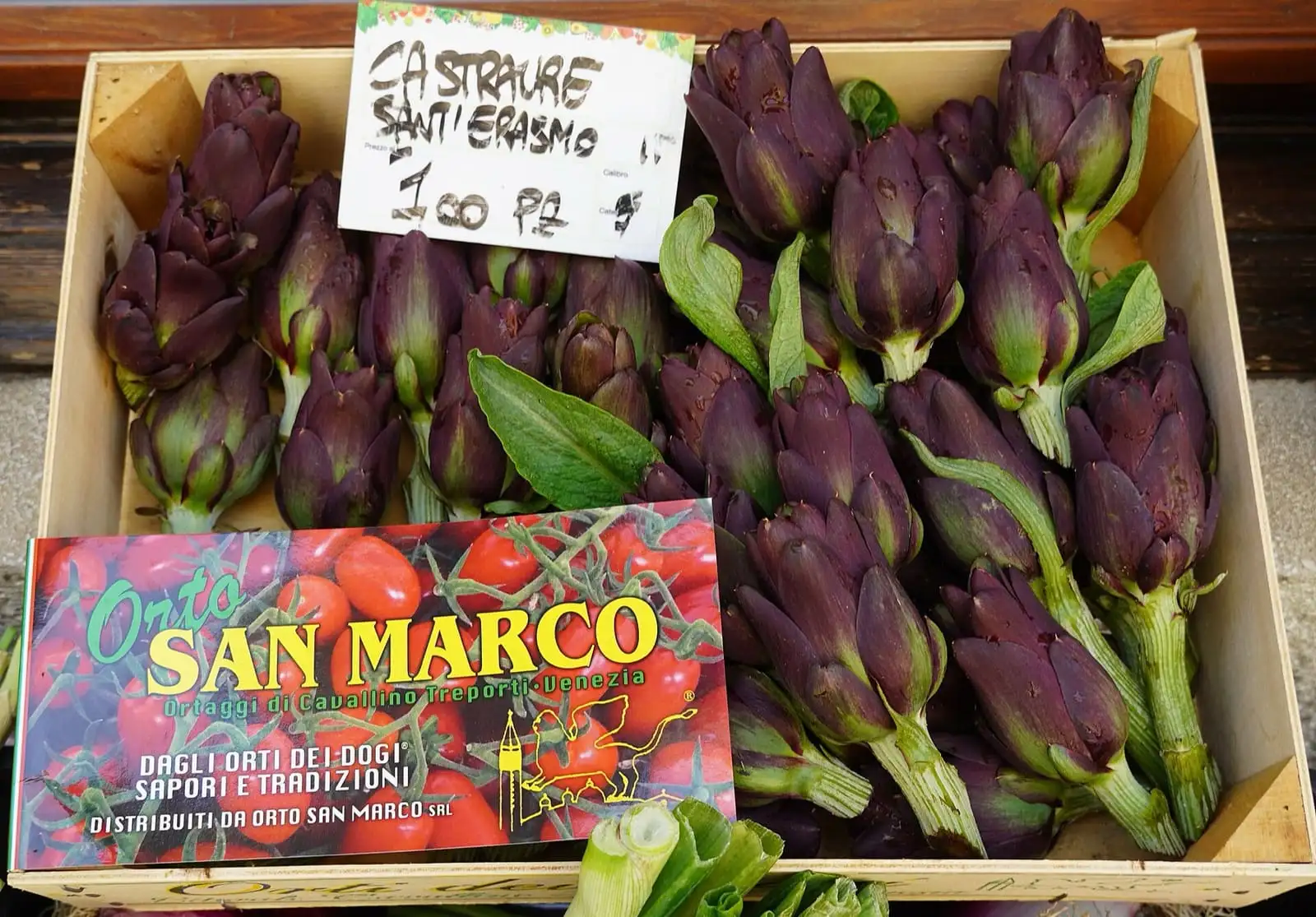

Castraure, the first purple artichokes from the island of Sant'Erasmo, sold by the piece in spring.
Sweets: fritole, galani, tiramisù and Burano biscuits
Fritole are fried balls of dough, the Venetian sweet of Carnival. The traditional ones are studded with raisins and pine nuts; others are filled with custard, zabaione or chocolate. Galani are thin ribbons of fried pastry dusted with powdered sugar. Pastry shops start making both when the Carnival season begins, which in 2027 runs from 23 January to 9 February; our Venice Carnival guide has the program.
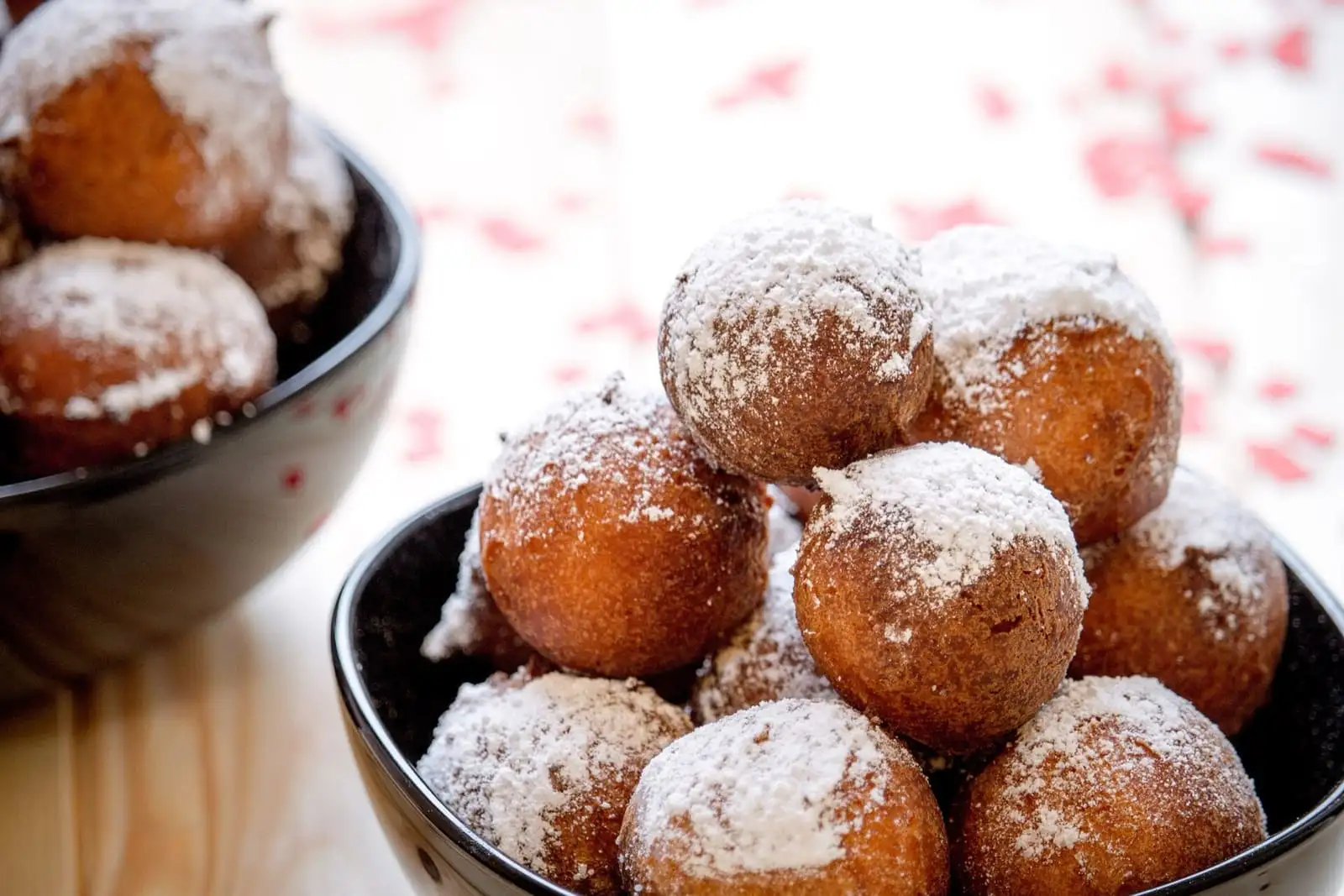

Fried dough balls dusted with powdered sugar, the fritole that Venice eats at Carnival.
Rosa SalvaMap, Campo Santi Giovanni e Paolo, Castello 6779, belongs to one of the oldest pastry families in the city, at work since the 1870s. It makes fritole at Carnival, plus zaleti (cornmeal biscuits with raisins) and baicoli (thin dry biscuits) all year. The branch on the campo faces the basilica of Santi Giovanni e Paolo, a calm square away from the main routes, and works as a café too: in winter you dip zaleti in hot chocolate, in summer local families come for the ice cream. It is open every day, 8am to 8pm.
Tiramisù is a dessert of the Veneto. The best-known claim places its birth in a restaurant in Treviso, north of Venice, whose recipe was registered with the Accademia Italiana della Cucina in 2010; Friuli Venezia Giulia, the region to the east, claims the dessert too. In Venice it is on almost every menu, €7 at Cantina Do Spade.
Bussolai and esse are butter biscuits from Burano, shaped as rings or as an S. Cantina Do Spade serves a plate of Venetian biscuits, esse, bussolai and zaleti, for €7.
Drinks: the spritz, the ombra and the Bellini
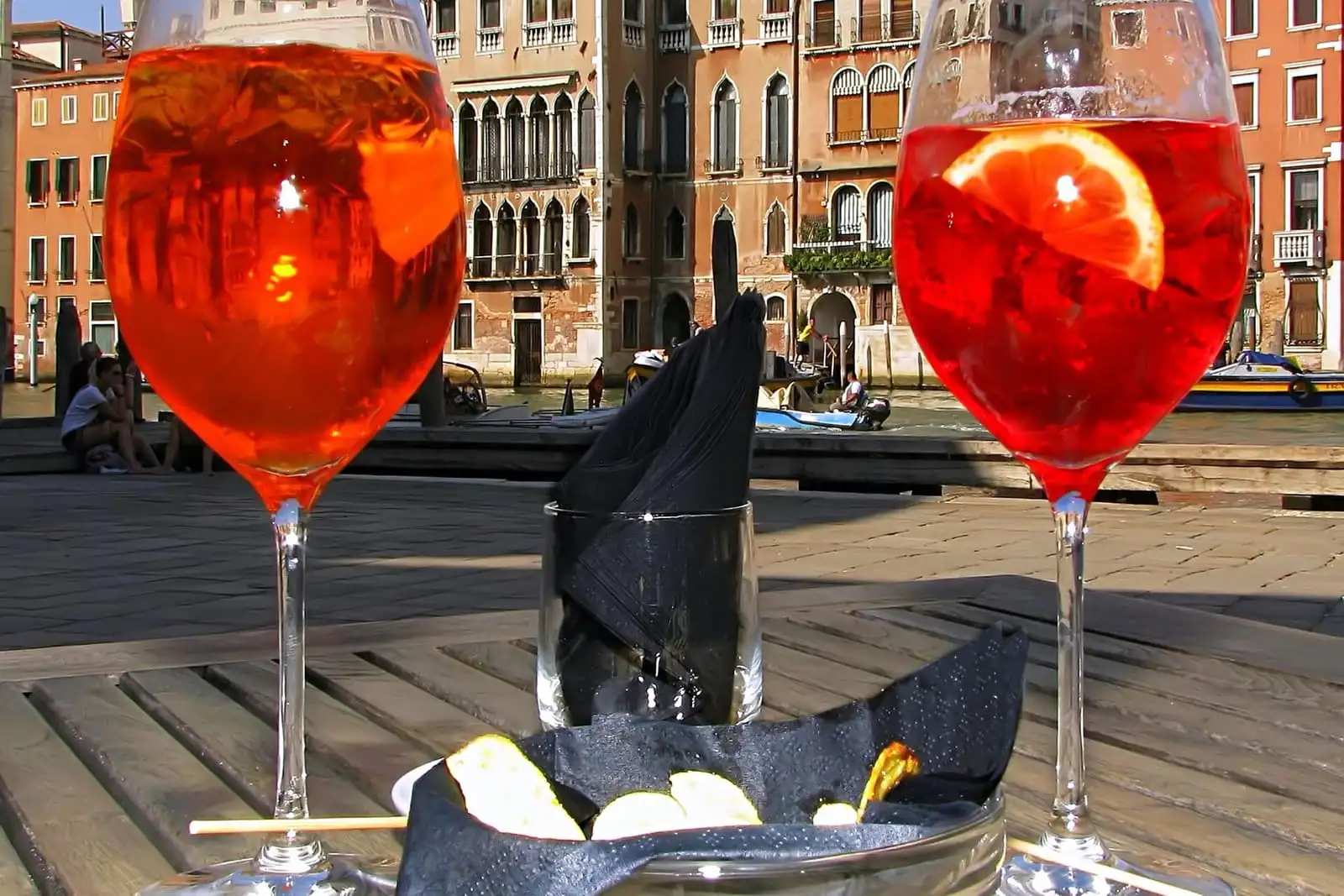
The spritz is Venice’s aperitivo: Prosecco, a bitter and a splash of soda water. Visitors usually order Aperol; ask for Select, a bitter born in Venice in 1920, which comes with a green olive. An ombra is a small glass of house wine, the usual drink at a bacaro; the cicchetti guide explains how to order one and where the name comes from.
The Bellini, Prosecco with white peach purée, was created in Venice in 1948 by Giuseppe Cipriani; the restaurants guide covers the bar where it was born. To taste Prosecco where it is made, see our day trip to the Prosecco hills.
Street food and eating on a budget
Street food in Venice means bar food: bites small enough to eat standing up, which is where the city is cheap.
AciughetaMap, Campo Santi Filippo e Giacomo, Castello 4359, near St. Mark’s, prints every price on its menu. Cicchetti cost €3 to €5 each: a crostino with baccalà mantecato €4.50, two sardines in saor €3.50, mozzarella in carrozza with anchovy €4, an egg with anchovy €3. A seat adds a €2.50 cover charge per person, service included. It has been run by the same family since 1978, and it is busy at all hours, with a mix of visitors and Venetians.
Other cheap things to eat: a tramezzino, a soft white sandwich cut in a triangle and packed with tuna, egg or ham, from any café counter; a cone of fried fish; a slice of pizza. For a full day of eating on a budget, with the costs added up, read is Venice expensive.
Two rules matter when you eat outside. The Comune fines anyone who eats sitting on the ground, on bridges, steps or canal banks, €100 to €200, and feeding pigeons or gulls costs €25 to €500. Eat at the bar, on a bench or standing, and keep a hand over your plate: the gulls take food from hands. Our guide to safety in Venice lists the other fines.
Why the food in Venice has a bad name, and how to avoid tourist traps
Venetian food is good. Its reputation comes from the busiest streets between St. Mark’s and the Rialto, where many restaurants cook for visitors they will never see again. A few checks keep you out of them.
- Read the menu outside. Menus with photos of every dish in five languages, a fixed tourist menu with lasagna and spaghetti bolognese, and a waiter calling you in from the door are the signs to walk on.
- Check the cover charge. The coperto, a per-person charge for bread and the table, is legal only when the menu shows it. Aciugheta prints €2.50; elsewhere look at the bottom of the menu before you sit.
- Ask the price of fish by weight. When the fish of the day is priced per etto (100 grams), ask what the whole fish weighs before you agree to it.
- Order the Venetian dishes. A kitchen that serves sarde in saor, bigoli in salsa and cuttlefish in ink is cooking for Venetians too.
- Walk five minutes. The quiet streets of San Polo, Cannaregio and Castello away from the main routes have places where more of the tables are Venetian.
- Book dinner. The good trattorie are small and fill up; the restaurants guide has their booking rules.
Food tours and cooking classes
If you would rather have someone order for you on the first night, a food tour covers the classics in this guide in two or three hours, with enough food for a meal. Several tours cap their groups at 10 people, so book a few days ahead.
The fish stalls of the Rialto market open Tuesday to Saturday from 7am to 2pm, so plan a market tour on those mornings; the Rialto Bridge guide has the market hours. Our Venice food tours guide compares seven tours by length, group size and price.
Frequently asked questions
What food is Venice famous for?
Lagoon seafood and a short list of dishes you rarely see outside the Veneto. Baccalà mantecato (dried cod whipped with olive oil), sarde in saor (fried sardines in sweet and sour onions), bigoli in salsa (thick pasta with an onion and anchovy sauce), cuttlefish cooked in its black ink with polenta and fegato alla veneziana (calf's liver with onions).
What is the best street food to try in Venice?
Cicchetti, the small bites on bread you eat standing at a bacaro counter with a glass of wine. At Aciugheta near St. Mark's, a crostino with baccalà mantecato costs €4.50 and two sardines in saor €3.50. Add a paper cone of fried fish, a tramezzino sandwich and, at Carnival, fritole.
What do locals eat in Venice?
A few cicchetti with an ombra, a small glass of wine, and dishes that follow the calendar. Castraure (baby artichokes) in late April and May, moeche (soft-shell crabs) in spring and fall, risi e bisi on 25 April, sarde in saor at the Redentore in July and castradina, a mutton and cabbage soup, on 21 November.
Why is the food in Venice so bad?
Venetian food is good; the trouble is the streets between St. Mark's and the Rialto, where many places cook for visitors they will never see again. Skip menus with photos in five languages and staff calling you in from the door, read the cover charge and the price of fish by weight before you sit, and book a trattoria for dinner.
Is tiramisu from Venice?
It comes from the Veneto, the region around Venice. The best-known claim places its birth in a restaurant in Treviso, whose recipe was registered with the Accademia Italiana della Cucina in 2010, while Friuli Venezia Giulia claims it too. You will find it on most Venice menus: €7 at Cantina Do Spade.
How much does a meal cost in Venice?
At Cantina Do Spade, an old osteria by the Rialto market, bigoli in salsa cost €16, cuttlefish in black ink with polenta €18 and tiramisu €7, with wine by the glass at €4 to €5. Standing at a bacaro counter, cicchetti cost about €3 to €5 each.
When is moeche season in Venice?
Spring and fall, for a few weeks each time, when the green crabs of the lagoon shed their shells. They are fried whole and served as a starter. Antiche Carampane in San Polo serves them in season.