Quick answer
To visit Venice for the first time, plan two nights between mid-April and May or in September and October, and stay in the historic center: San Polo, Dorsoduro or San Marco. Before you fly, book St. Mark’s Basilica and the Doge’s Palace, where tickets bought online at least 30 days ahead cost €30 instead of €35. Day-trippers pay an access fee of up to €10 on 72 days in 2027. In town you walk, or ride the vaporetto for €9.50 a trip or €25 with a 24-hour pass.
Prices and times checked on 14 November 2026.
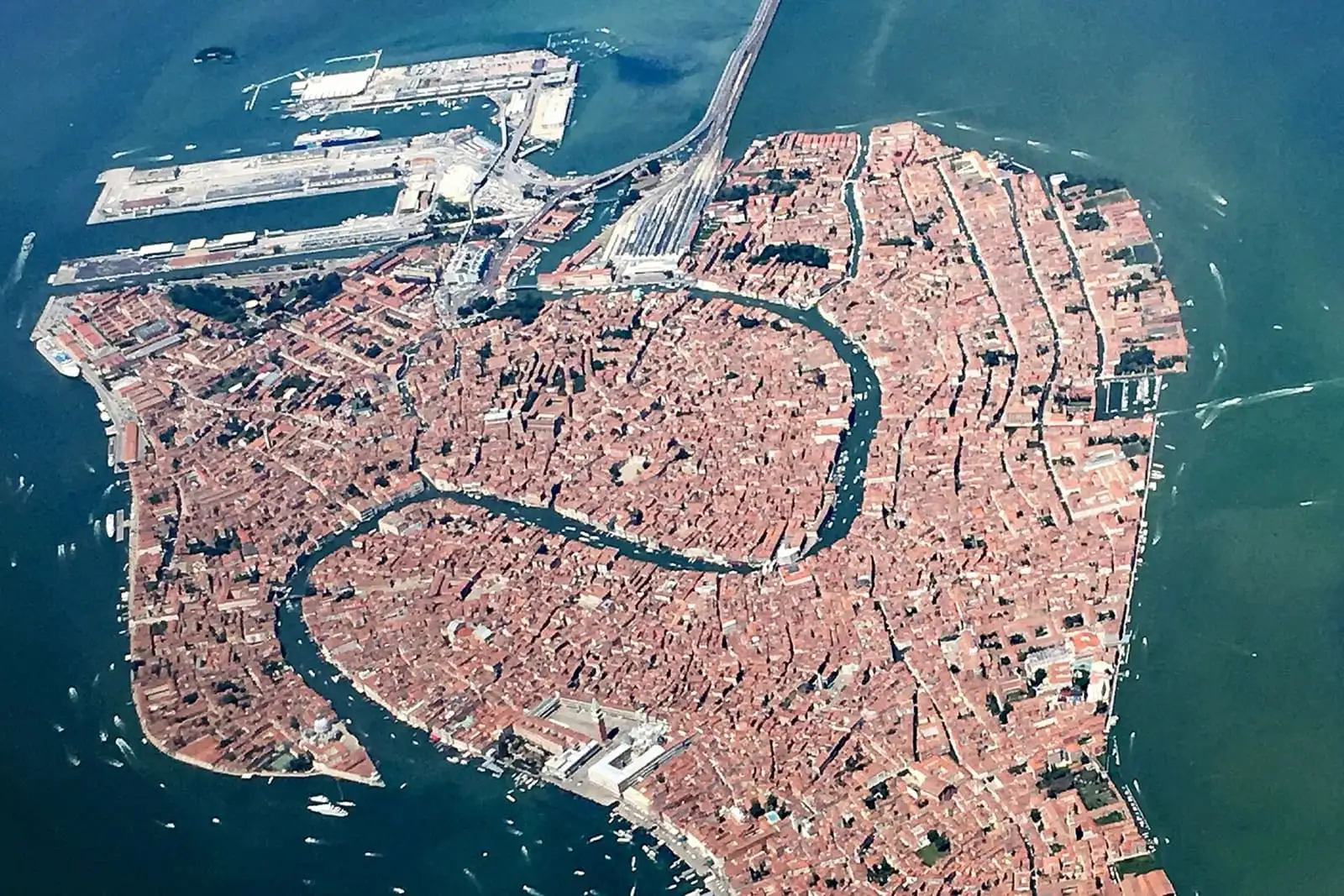
See hotels in Venice Book St. Mark’s Basilica tickets Book Doge’s Palace ticketsVenice is one of the 44 municipalities of the Metropolitan City of Venice, in the Veneto region of northeast Italy. The part you come to see is the historic center: six districts on islands in a lagoon, with no cars. This page is the planner for a first Venice trip. Each section gives you the fact that matters, then sends you to the full guide: where to stay, the access fee, getting around and what to see.
How to plan a trip to Venice in 3 steps
- Pick your dates. Choose the season first, then check two calendars: the 2027 access fee days, if you come for the day, and the events that fill hotels, such as Carnival and the Biennale. Two nights is the right length for most first visits.
- Book your bed and your arrival. Book a hotel near a vaporetto stop in the center, then your train or flight. If you arrive by train, buy the ticket to Venezia Santa Lucia, not Venezia Mestre.
- Book the timed tickets and sort out the money. St. Mark’s Basilica sells entry by time slot, and the Doge’s Palace costs €5 less if you buy online 30 days ahead. Decide whether a vaporetto pass pays off and make sure your card works abroad without fees.
The table below puts the deadlines in order.
What to book before you go, and when
| When | What to do | Why | Book |
|---|---|---|---|
| As soon as you have dates | Book your hotel, earlier still for Carnival or the Biennale | The best-placed rooms go first | See hotels |
| Up to 90 days ahead | Book St. Mark’s Basilica (€10, or €30 with the Pala d’Oro, museum and terrace) | Entry is by time slot; the official shop opens each date 90 days ahead, with a limit of 5 tickets per account per year | Official shop, guided tours |
| 30 days ahead or more | Buy the Doge’s Palace ticket online | €30 online at least 30 days ahead, €35 after that | Official site, tickets and tours |
| 2 weeks ahead or more | Book long-distance trains to Venice | High-speed fares rise as the date gets close | Rome to Venice, Milan to Venice |
| Before you fly | Buy a vaporetto pass if you will ride 3 or more times a day | You get a booking code to turn into a ticket at a Venezia Unica machine | See the pass |
| Before you fly | Set up mobile data | Maps and boat timetables live on your phone | See Italy eSIMs |
| Before a fee day in 2027 | Day-trippers pay the access fee; overnight guests check the exemption | The 2027 rules and the payment portal come out by 31 December 2026 | Official site |
| Before you fly | Check your passport | Valid 3 months after you leave the EU, issued within the last 10 years | Nothing to book |
Restaurants and gondolas are the exception: book a table for dinner at a popular place, but a gondola ride can wait until you are there. Our guides to St. Mark’s Basilica tickets and Doge’s Palace tickets explain the time slots, the dress code and the bag rules.
Book Doge’s Palace ticketsWhen to visit Venice
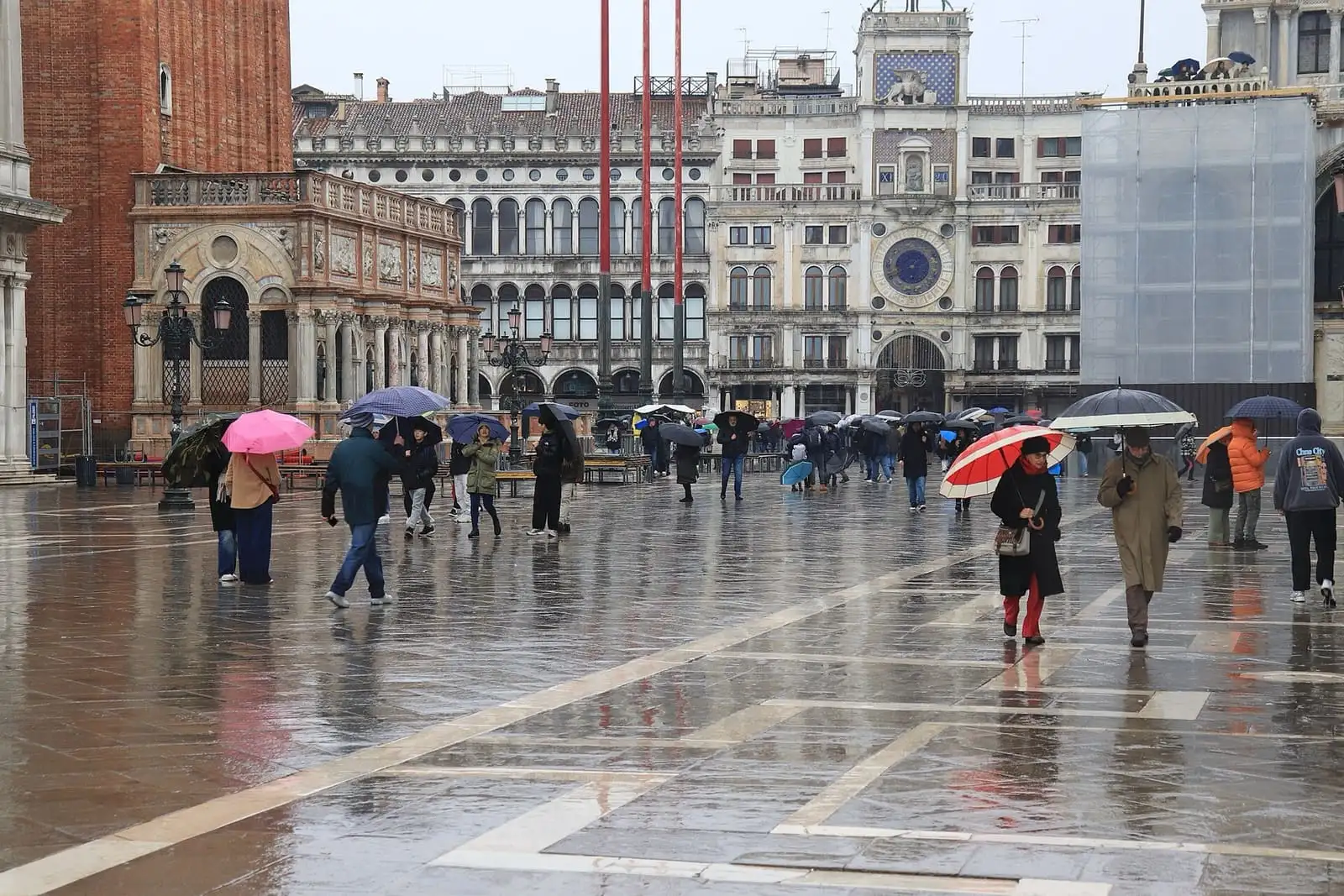
The best months for a first visit are mid-April to May and September to October. Average highs run from 63°F to 75°F, warm enough to walk all day without the July heat and crowds. January is the quietest month; July is the busiest and hottest.
Three things change a trip more than the weather:
- Access fee days. In 2027 the city charges day visitors on 72 days from 26 March to 15 August, mostly Fridays to Sundays and holidays. For fewer day-trippers, pick a weekday.
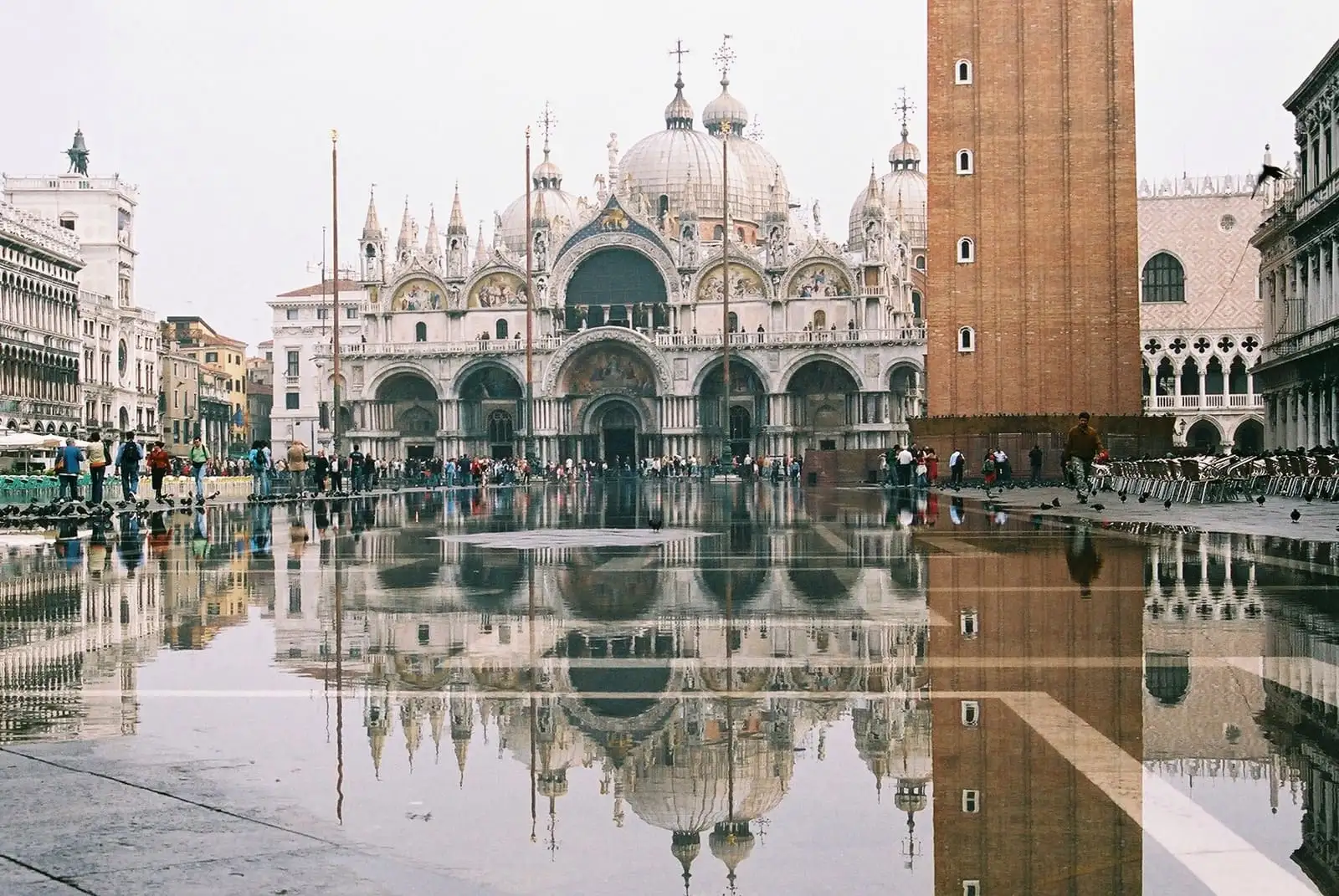
- Acqua alta. The high tides that flood St. Mark’s Square come mostly between October and February, peak in November and drain within a few hours. Our acqua alta guide explains the sirens and the forecast.
- Events. Carnival, the Biennale and the Redentore weekend in July fill the city and push up hotel prices. See Venice events and the Venice Carnival guide.
For month-by-month detail, read the best time to visit Venice, the Venice weather by month guide with packing advice, and Venice in winter.
How many days in Venice
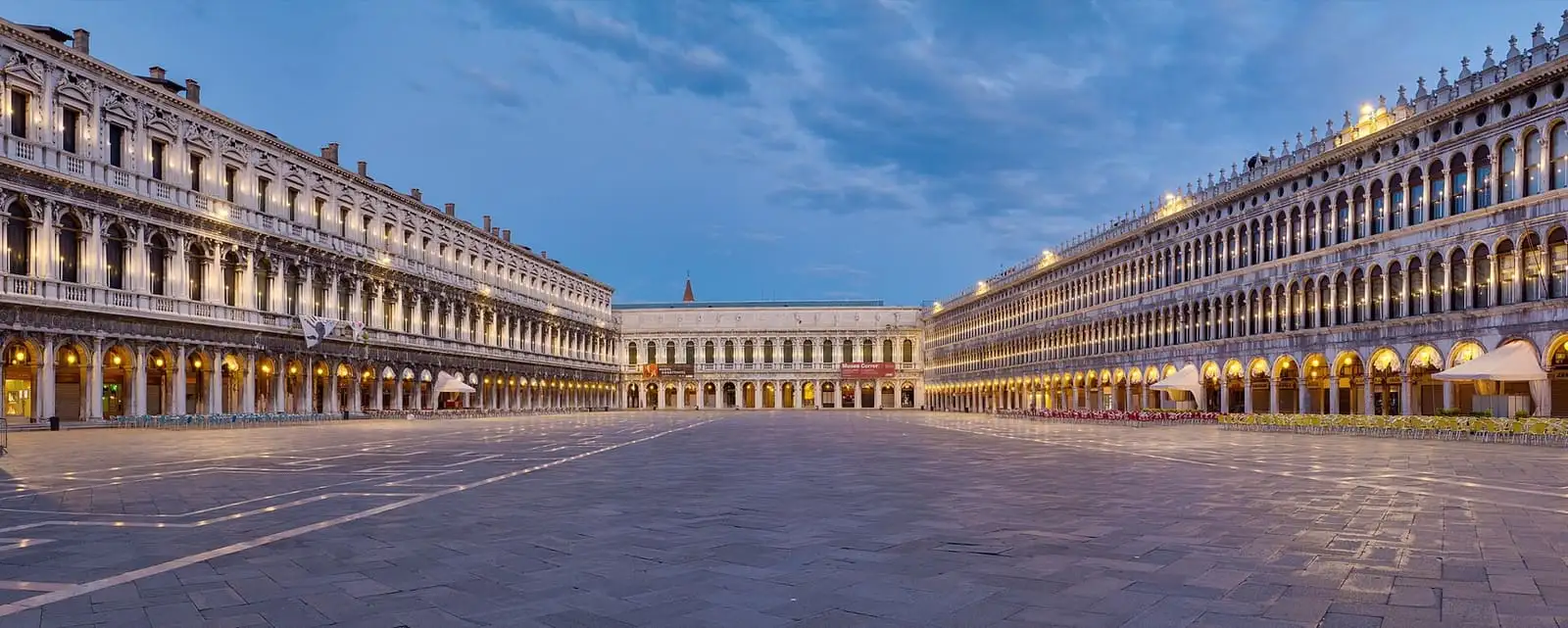
Plan two nights. The first full day covers St. Mark's SquareMap, St. Mark's BasilicaMap, the Doge's PalaceMap and the Rialto BridgeMap. The second covers Dorsoduro, with the Gallerie dell'AccademiaMap or the GuggenheimMap, or a morning in Murano and Burano. A third night lets you add Torcello or the Lido without rushing.
A day trip works, but you see the city at its busiest, and in 2027 you may pay the access fee. Staying the night also gives you the early mornings and the evenings, when the day visitors have gone. Our guide on how many days in Venice has plans for 1, 2 and 3 days, and day trips from Venice covers the islands and the cities you can reach by train, such as Padua and Verona.
See Murano and Burano boat toursWhere to stay in Venice
Stay in the historic center if you can. These are the areas that work best for a first visit:
| Area | Why stay here | The catch | Hotels |
|---|---|---|---|
| San Polo | Central, by the Rialto and its market | Fewer hotels, busy around the bridge | See hotels |
| Dorsoduro | Museums and quiet evenings | Stay near the Accademia or you walk a lot | See hotels |
| San Marco | Closest to the main sights | The most crowded and expensive area | See hotels |
| Cannaregio | Better value, local evenings, near the station | The north side is far from San Marco | See hotels |
| Mestre (mainland) | The lowest prices | You travel in and out every day | See hotels |
Every hotel adds the city’s tourist tax, paid at the hotel: €1 to €5 per person per night in the historic center depending on the stars (a little less in January), for the first five nights only, and free for children under 10. Before you book, ask which vaporetto stop is nearest and how many bridges with steps stand between it and the door. The where to stay guide compares every area with hotels, and there are separate guides to cheap hotels in Venice, staying in Mestre and hotels near the train station.
See hotels in VeniceThe Venice access fee in 2027
Venice charges day visitors an access fee on set days. In 2027 it applies on 72 days from 26 March to 15 August, from 8:30am to 4:30pm, and costs up to €10. You pay online on the city’s portal at cda.ve.it and carry the QR code with you.
Under the 2026 rules, guests staying overnight in the municipality of Venice, Mestre and the Lido included, did not pay but had to register an exemption, and children under 14 were exempt. The city will publish the 2027 rules, the price split and the portal opening date by 31 December 2026. The access fee guide lists every 2027 date and will follow the new rules.
Getting to Venice
Every arrival ends at Piazzale Roma, Santa Lucia station or a boat dock on the edge of the historic center.
| Arriving from | How | Time and fare | Book |
|---|---|---|---|
| Marco Polo Airport | Bus to Piazzale Roma | About 20 minutes; €10 (ACTV) or €12 (ATVO) | See the airport bus |
| Marco Polo Airport | Water taxi to your hotel | About 30 minutes; €160 per boat on the official fare | See the private water taxi |
| Milan | Direct train to Santa Lucia | About 2 hours 30 minutes | Check train times |
| Florence | Direct train to Santa Lucia | About 2 hours 15 minutes | Check train times |
| Rome | Direct train to Santa Lucia | About 4 hours | Check train times |
From the airport, our Marco Polo Airport to Venice guide compares the bus, the Alilaguna boat and water taxis. By train, see the guides from Milan, Florence and Rome, and the Venice train station guide for left luggage and the walk into town. Cruise passengers should read the Venice cruise port guide.
Getting around Venice
You walk, and you take the vaporetto, the public water bus, for longer hops and the islands. The walk from Santa Lucia station to St. Mark’s Square takes about 30 minutes, and most bridges have steps, which matters with suitcases.
A vaporetto ride costs €9.50 and lasts 75 minutes. Passes cost €25 for 24 hours, €35 for 48 hours, €45 for 72 hours and €65 for 7 days. A daily pass pays off from the third ride. You can also tap a contactless card on the validator for each ride: ACTV stops charging once your taps reach the price of the matching pass. To cross the Grand Canal between bridges, a traghetto gondola ferry costs €2.
The getting around Venice guide compares every option and the pass for your stay. The vaporetto guide covers lines and luggage rules, and the map of Venice explains the six districts and the odd addresses.
Book a vaporetto passMoney: cards, cash, tipping and the coperto
Italy uses the euro. Italian law requires every business that sells goods or services to accept debit and credit cards, with fines for refusing since 30 June 2022, and you can tap a contactless card to pay for the vaporetto. Keep some cash for small purchases anyway.
- Pay in euros. When a card machine or an ATM offers to charge you in dollars, decline. That conversion adds its own exchange rate and fees, and Visa’s rules say the merchant must let you choose.
- Read the bottom of the menu. The coperto is a per-person cover charge for bread and the table, and a restaurant can charge it only if the menu shows it. Some places also print a service charge.
- Tipping is optional. It is not expected the way it is in the US. If service is already on the bill, you do not need to add anything.
- Drink from the fountains. The public drinking fountains in the squares give free drinking water, so carry a bottle.
A day of food, transport and one paid sight costs about €37 per person on a shoestring and €141 mid-range, before your hotel. The Venice on a budget guide breaks this down with menu prices.
Venice travel tips: do’s and don’ts
Venice fines visitors for things most cities allow. These are the Comune di Venezia’s amounts:
| Don’t | Fine |
|---|---|
| Sit or lie on bridges, steps, canal banks or monuments, or eat sitting on the ground | €100 to €200, and an order to leave the area |
| Swim or dive in the canals | €350 |
| Drop litter | €350 |
| Walk around bare-chested or in a swimsuit | €250 |
| Ride a bicycle, or push one by hand | €100 |
| Feed the pigeons or seagulls | €25 to €500 |
And a few do’s:
- Cover your shoulders and knees for St. Mark’s Basilica, which also turns away backpacks larger than 40 x 30 x 20 cm and all wheeled bags.
- Validate your boat ticket before you walk onto the vaporetto stop. Inspectors fine riders without a valid ticket.
- Go out early and late. The lanes around St. Mark’s and the Rialto are calmest in the early morning and in the evening, when the day visitors have left.
What to see and eat on a first visit
Start with things to do in Venice, which lists 15 sights with prices, hours and the nearest vaporetto stop. The two you should book are the Basilica and the Doge’s Palace; the rest you can decide on the day, from the Grand Canal by vaporetto to the Venice museums and the Jewish Ghetto. For an evening out, La Fenice sells opera and concert tickets as well as daytime visits.
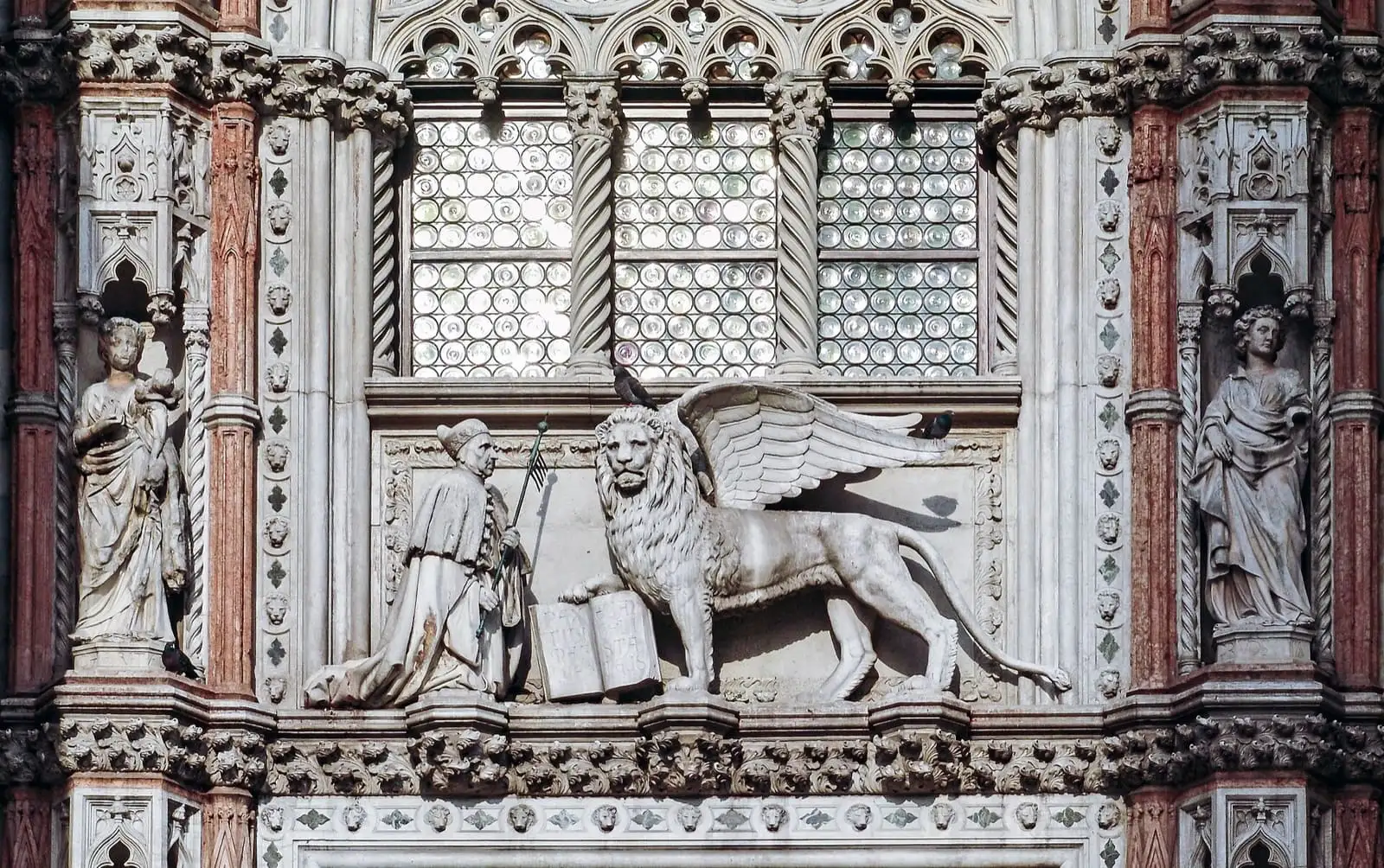
The winged lion of St. Mark and Doge Francesco Foscari above the Porta della Carta, the old ceremonial gate of the Doge's Palace.
If you want someone to explain what you are looking at, a guided tour of the Basilica and the Doge’s Palace covers both in one visit, and our walking tours guide compares the options.
See Basilica and Doge’s Palace toursFor food, what to eat in Venice explains the Venetian dishes and when they are in season, and the guides to cicchetti and bacari and the best restaurants in Venice tell you where to eat them.
Is Venice safe?
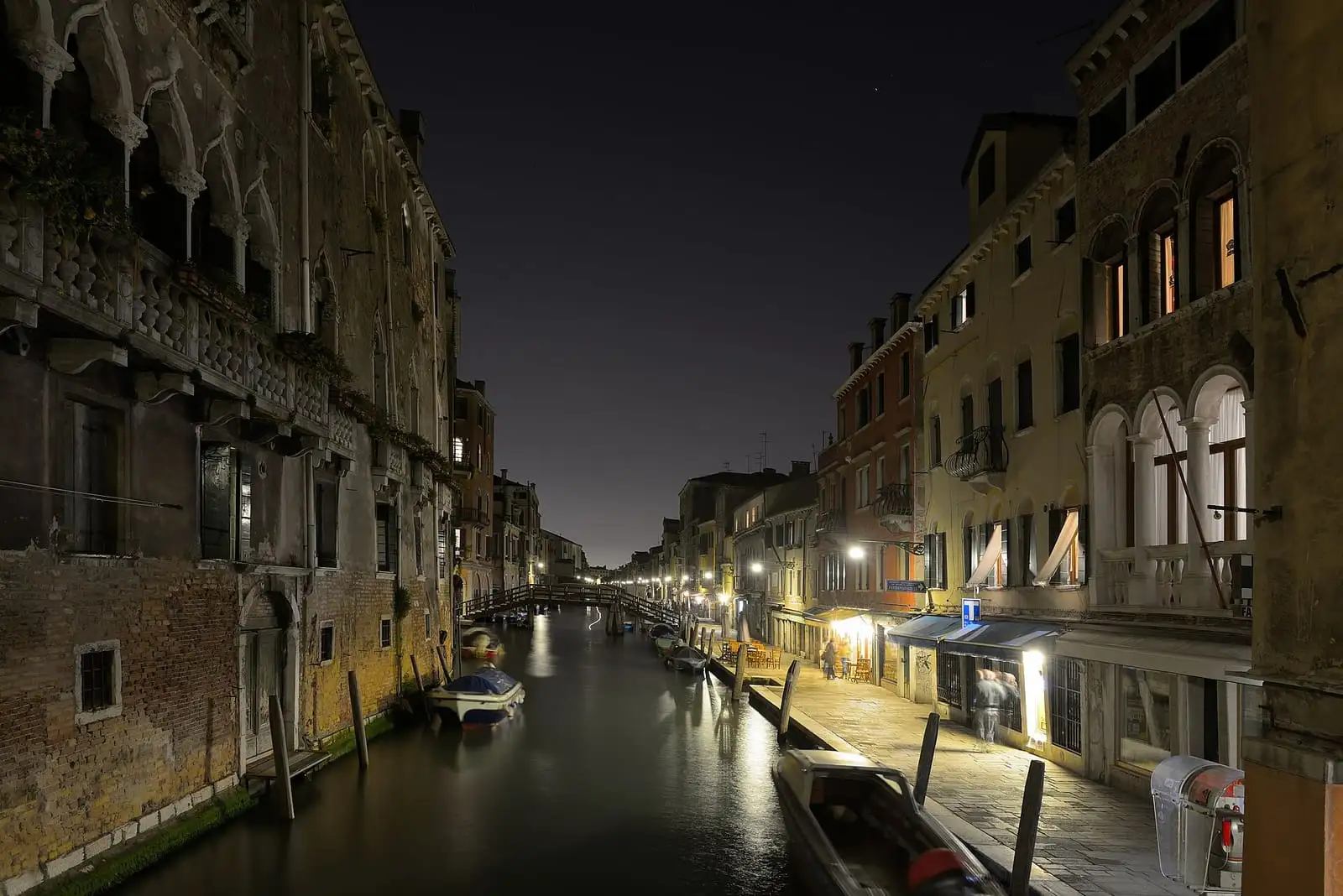
Yes, Venice is safe for visitors. The risk you are most likely to meet is a pickpocket in the crowds at the station, Piazzale Roma, the Rialto Bridge, St. Mark’s Square and on the vaporetto. At night the lanes are quiet; the real hazards are getting lost and slipping near a canal. In an emergency, call 112. The Venice safety guide shows where to be careful.
Passport, EES and ETIAS
US citizens do not need a visa to visit Italy for up to 90 days in any 180-day period. Your passport must be valid at least 3 months after the day you plan to leave the EU and have been issued within the last 10 years.
Since 10 April 2026, the EU’s Entry/Exit System (EES) has replaced passport stamps: the first time you enter, border staff record your passport, fingerprints and a photo of your face. ETIAS, the EU’s travel authorization for visa-free visitors, is not in operation yet and takes no applications. When it starts it will cost €20, and the EU will announce the date several months ahead on its official ETIAS site.