
Quick answer
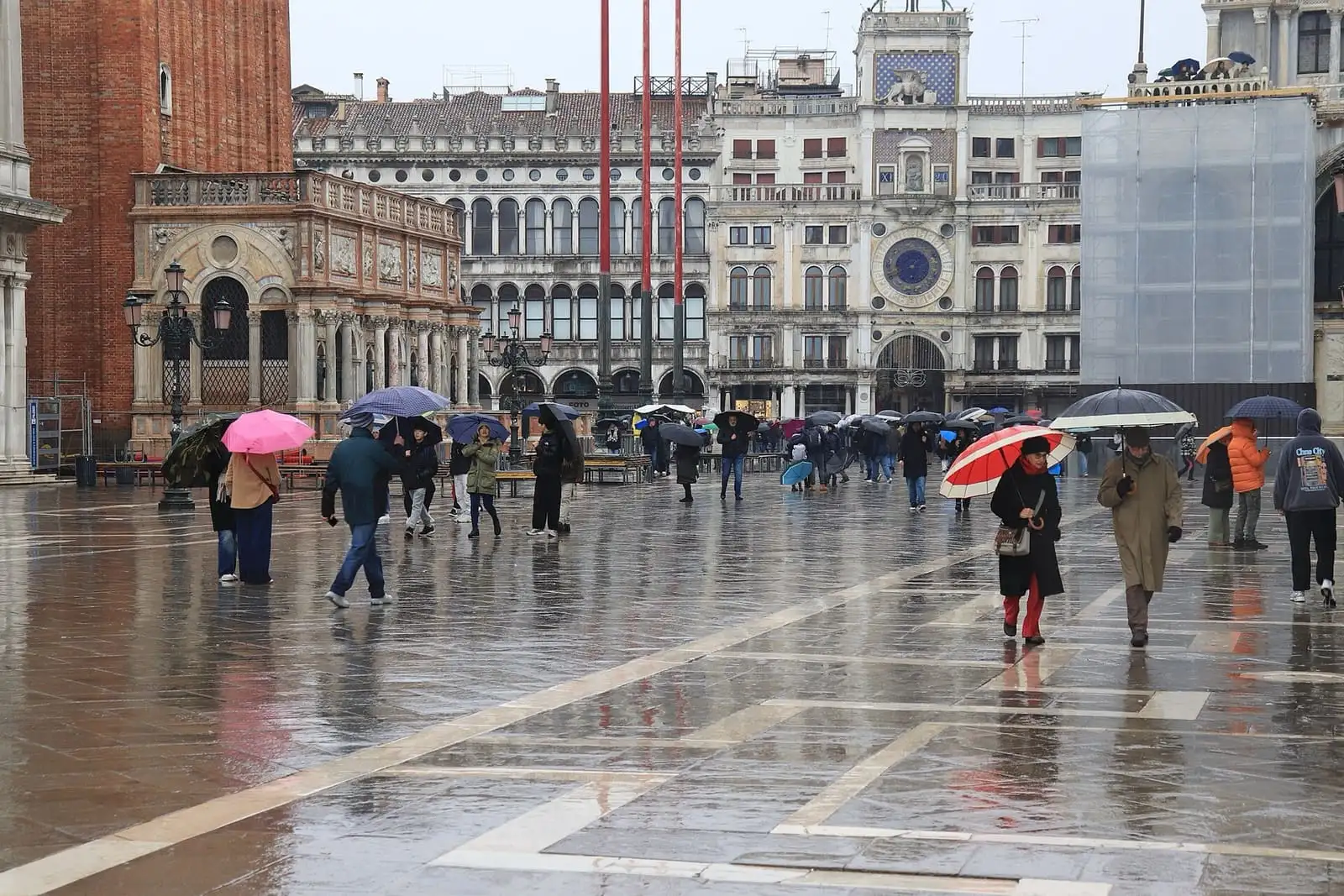
Venice has cold, damp winters and hot, humid summers. Average highs run from 46°F (7.5°C) in January to 83°F (28.5°C) in July, and lows from 37°F to 71°F. September brings the most rain, November the most rainy days and the most acqua alta, the high tide that floods St. Mark’s Square.
Climate data and tide records checked on 14 November 2026.
Check hotels in Venice for your dates Book an indoor tour for a rainy dayThe figures on this page are 25-year averages (2001 to 2025) from ARPAV, the Veneto region’s environmental agency, for its weather station at the Istituto Cavanis in Dorsoduro, in the middle of the historic center. Temperatures are in °F first, with °C in parentheses. The tide figures come from the Comune di Venezia’s tide center.
If you are still choosing your dates, our guide to the best time to visit Venice adds crowds, events and hotel prices to the weather. Once you have them, compare hotels in Venice on Booking.com, and in summer filter for air conditioning.
Venice weather by month at a glance
| Month | Avg high | Avg low | Rain | Rainy days | Sunset on the 15th | Tides of 110 cm or more, 1872 to 2021 |
|---|---|---|---|---|---|---|
| January | 46°F (7.5°C) | 37°F (2.8°C) | 1.8 in (46 mm) | 6.0 | 4:52pm | 28 |
| February | 49°F (9.2°C) | 39°F (4.0°C) | 2.3 in (57 mm) | 6.2 | 5:36pm | 35 |
| March | 55°F (12.8°C) | 45°F (7.2°C) | 2.7 in (68 mm) | 6.4 | 6:15pm | 11 |
| April | 63°F (17.0°C) | 52°F (11.3°C) | 2.5 in (63 mm) | 7.4 | 7:55pm | 8 |
| May | 71°F (21.5°C) | 60°F (15.7°C) | 3.1 in (79 mm) | 7.8 | 8:32pm | 5 |
| June | 79°F (26.3°C) | 68°F (20.2°C) | 2.4 in (61 mm) | 5.8 | 9:00pm | 3 |
| July | 83°F (28.5°C) | 71°F (21.9°C) | 2.5 in (64 mm) | 5.8 | 8:57pm | 0 |
| August | 83°F (28.3°C) | 70°F (21.3°C) | 2.6 in (65 mm) | 6.0 | 8:21pm | 0 |
| September | 75°F (23.8°C) | 63°F (17.2°C) | 3.8 in (96 mm) | 5.9 | 7:24pm | 2 |
| October | 66°F (18.7°C) | 55°F (13.0°C) | 2.8 in (70 mm) | 6.2 | 6:27pm | 45 |
| November | 56°F (13.2°C) | 47°F (8.3°C) | 3.1 in (80 mm) | 8.1 | 4:42pm | 107 |
| December | 47°F (8.6°C) | 39°F (3.8°C) | 2.2 in (55 mm) | 6.5 | 4:28pm | 80 |
Over a year Venice averages 59°F (15.1°C), with about 31.7 inches (804 mm) of rain on 76 days. The highest reading of the last 25 years was 97°F (36.0°C), in July 2015, and the lowest 19°F (-7.4°C), in December 2009. Sunset times are for 2027, with daylight saving time from 28 March to 31 October.
The last column counts every tide of 110 cm or more recorded in Venice since 1872. At that level about 12% of the city floods, and St. Mark’s Square goes under water from about 80 cm. Since December 2020 the MOSE barriers at the sea inlets have been raised for the highest forecasts, so many of these tides no longer reach the city.
Venice’s climate in brief
Venice sits in a shallow lagoon at the top of the Adriatic, and the air stays moist all year. Over the last 25 years the station’s average daily maximum humidity was 90% and its average daily minimum 57%. In practice summer nights feel sticky, and a 40°F winter morning feels colder than the number suggests.
| Season | Average highs | Rain in the season | Rainy days | What to expect |
|---|---|---|---|---|
| Spring (March to May) | 55°F to 71°F | 8.3 in (210 mm) | 22 | Mild and changeable, with more rainy days each month |
| Summer (June to August) | 79°F to 83°F | 7.5 in (190 mm) | 18 | Hot and humid, with the fewest rainy days |
| Autumn (September to November) | 75°F down to 56°F | 9.7 in (246 mm) | 20 | The wettest season, and acqua alta from October |
| Winter (December to February) | 46°F to 49°F | 6.2 in (159 mm) | 19 | Cold and damp, with frosty nights and short days |
Does Venice have a rainy season?
Rain falls in every month, on 6 to 8 days, so there is no dry season to aim for. Autumn is the wettest season and winter the driest. September collects the most rain of any month, about 0.6 inches per rainy day, which means fewer wet days with heavier rain. November has the most rainy days, and January the least rain.
Venice weather in January
January is the coldest month. Highs average 46°F (7.5°C) and lows 37°F (2.8°C), and the temperature fell below freezing at least once in 20 of the last 25 Januaries, down to 24°F (-4.6°C) in 2017. It is also the driest month, with about 1.8 inches of rain over 6 days.
On 15 January the sun rises at 7:47am and sets at 4:52pm, so plan indoor sights for the late afternoon. Tides of 110 cm are less frequent than in late autumn (28 since 1872), but the raised walkways stay ready all winter. Pack a warm coat, a hat, gloves and waterproof shoes. The Venice Carnival starts on 23 January 2027.
Venice weather in February
February is still cold and slightly wetter than January. Highs average 49°F (9.2°C) and lows 39°F (4.0°C), with about 2.3 inches of rain over 6 days. Frost came in 12 of the last 25 Februaries, and the coldest February night was 21°F (-6.3°C), in 2012.


Snow on the Alberoni dunes at the southern end of the Lido on 28 February 2018.
By 15 February the sun sets at 5:36pm. February has had more tides of 110 cm than January (35 since 1872), and a cold snap can bring snow, although most winter precipitation falls as rain. Pack the same winter clothes as in January. The Carnival runs until 9 February 2027, and our Venice in winter guide covers the cold months in more detail.
Venice weather in March
March is the start of spring, and the weather is changeable. Highs average 55°F (12.8°C) and lows 45°F (7.2°C), with about 2.7 inches of rain over 6 days. Frost is now rare: it came in only 3 of the last 25 Marches.
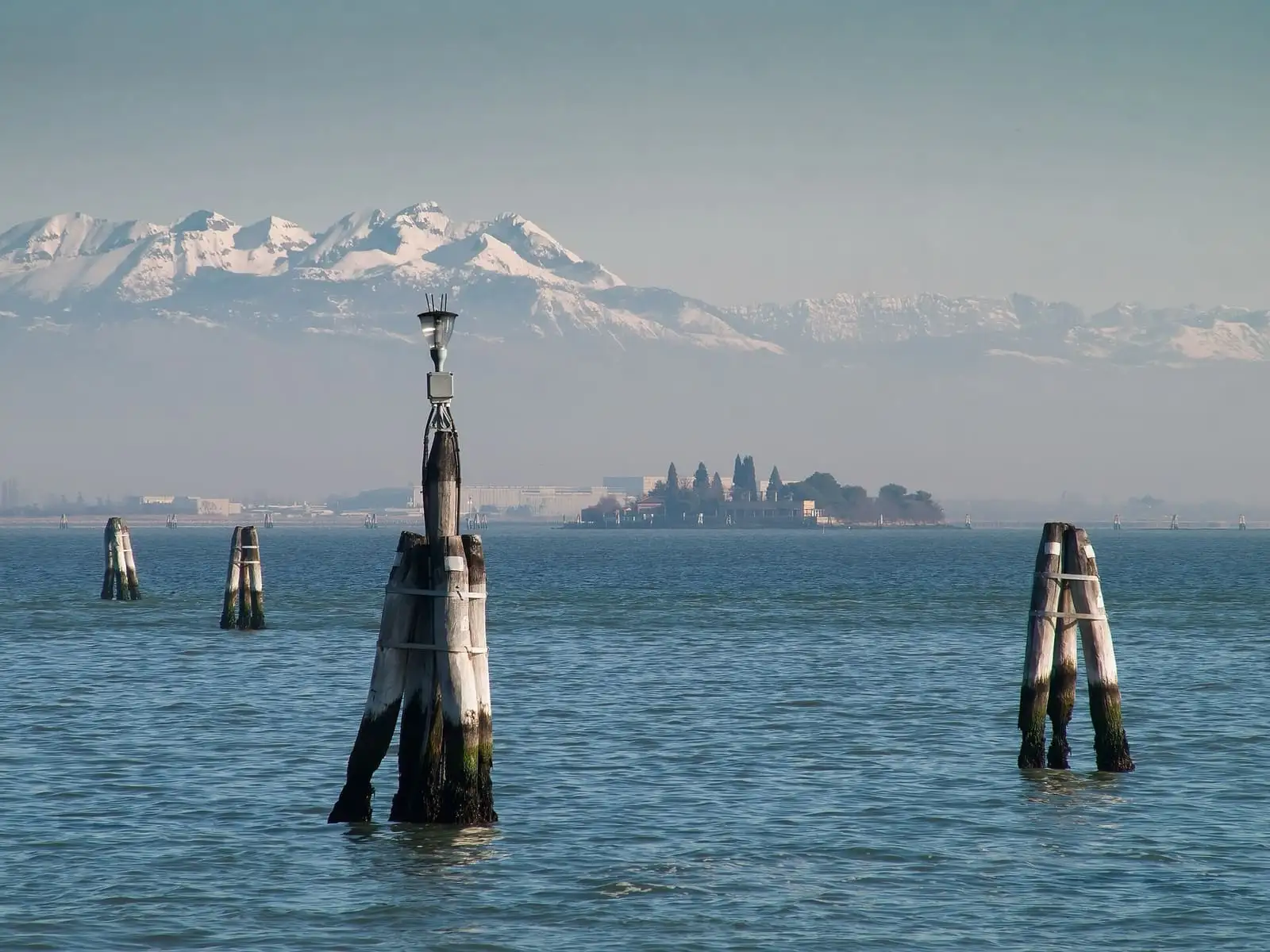

The snow-capped Alps seen across the northern lagoon from the Fondamente Nove on 16 March 2009.
On some clear days you can see the snowy Alps from the Fondamente Nove, the northern waterfront of Cannaregio, where the boats leave for Murano. On 15 March the sun sets at 6:15pm, and the clocks go forward on Sunday 28 March 2027, which is also Easter Sunday. Bring layers, a warm jacket and a compact umbrella.
Venice weather in April
April is mild, with highs of 63°F (17.0°C) and lows of 52°F (11.3°C). It has more rainy days than March, about 7, for 2.5 inches of rain. The warmest April day of the last 25 years reached 79°F (26.2°C), in 2024.
On 15 April the sun sets at 7:55pm, so evenings are long enough for a walk after dinner. Acqua alta is now unusual (8 tides of 110 cm since 1872), and the walkway season ends on 30 April. Pack layers and a light waterproof jacket. April is one of the busiest months for museums, so book the Doge’s Palace ahead.
Book Doge’s Palace ticketsVenice weather in May
May is warm. Highs average 71°F (21.5°C) and lows 60°F (15.7°C). It is also showery: about 3.1 inches of rain over 8 days, more rainy days than any month except November. Only 3 of the last 25 Mays reached 86°F (30°C), with a top of 87°F (30.7°C) in 2009.
By 15 May the sun rises at 5:41am and sets at 8:32pm. Mosquitoes arrive with the warm weather: in 2026 the Comune’s mosquito-control campaign against the tiger mosquito and the common mosquito ran from late April to 31 October. Pack light clothes, a sweater for the evening, an umbrella and insect repellent.
Venice weather in June
June is warm and still easier than July. Highs average 79°F (26.3°C) and lows 68°F (20.2°C), with about 2.4 inches of rain over 6 days. The temperature reached 86°F (30°C) in 20 of the last 25 Junes, and 95°F (34.9°C) in June 2019.
June has the longest days: on 21 June the sun rises at 5:22am and sets at 9:02pm. Acqua alta is very rare, with 3 tides of 110 cm since 1872. Pack summer clothes, a hat and sunscreen. For a swim, the Lido is Venice’s beach island, reached by vaporetto line 1.
Venice weather in July
July is the hottest month. Highs average 83°F (28.5°C) and lows 71°F (21.9°C), and every July of the last 25 years reached 86°F (30°C) at least once. The highest reading in that time, 97°F (36.0°C), came in July 2015. Rain is light, about 2.5 inches over 6 days.
Nights stay warm and humid, so a room with air conditioning matters more than the view. Walk early in the morning and after 6pm, and spend the middle of the day in churches and museums. No tide of 110 cm has ever been recorded in July. The Redentore fireworks fall on Saturday 17 July 2027; our best time to visit guide covers the evening and the viewing areas.
See hotels in Venice for JulyVenice weather in August
August is almost as hot as July, with highs of 83°F (28.3°C) and lows of 70°F (21.3°C). The temperature reached 86°F in 22 of the last 25 Augusts, and the hottest August day was 96°F (35.7°C), in 2025. Rain comes on about 6 days, for 2.6 inches.
On 15 August, Ferragosto, a national holiday, the sun sets at 8:21pm. Summer floods are still almost unknown: on 28 August 2023 the sea off Venice passed 110 cm for the first time in July or August, and the MOSE barriers kept the lagoon below 90 cm. Pack as for July, plus insect repellent for evenings by the water.
Venice weather in September
September starts warm and ends mild. Highs average 75°F (23.8°C) and lows 63°F (17.2°C), and 86°F was reached in 6 of the last 25 Septembers. It is the wettest month by volume, with about 3.8 inches (96 mm) of rain, but over only 6 days.
On 15 September the sun sets at 7:24pm. The same day the walkway season begins, although September tides of 110 cm are rare (2 since 1872). The Regata Storica fills the Grand Canal on Sunday 5 September 2027. Pack summer clothes, a light jacket for the evening and an umbrella.
Venice weather in October
October is mild and cooling. Highs average 66°F (18.7°C) and lows 55°F (13.0°C), with about 2.8 inches of rain over 6 days.
It is also the month when acqua alta becomes a real possibility, with 45 tides of 110 cm since 1872. Autumn high tides come mostly in the morning, when the day’s highest astronomical tide falls. On 15 October the sun sets at 6:27pm, and the clocks go back on Sunday 31 October 2027. Pack a jacket, layers and shoes that grip on wet stone.
Venice weather in November
November feels the wettest month. It has the most rainy days, about 8, for 3.1 inches of rain, and highs drop to 56°F (13.2°C), with lows of 47°F (8.3°C). It never reached freezing in the last 25 years.
It is the peak month for acqua alta: 107 of the 324 tides of 110 cm or more recorded since 1872 came in November, including the two highest, 194 cm on 4 November 1966 and 187 cm on 12 November 2019. With October and December, it accounts for about 70% of all high tides. The water usually drains within a few hours, and our acqua alta guide explains the sirens, the forecast and what to wear.
On 15 November the sun sets at 4:42pm. Pack a warm waterproof jacket and waterproof shoes or boots. The Festa della Salute on 21 November sends Venetians across a temporary bridge on the Grand Canal.
Venice weather in December
December is cold and damp, with highs of 47°F (8.6°C) and lows of 39°F (3.8°C). The temperature fell below freezing in 18 of the last 25 Decembers, and the coldest night of those years, 19°F (-7.4°C), came in December 2009. Rain is moderate, about 2.2 inches over 6 or 7 days.
December has the shortest days: on 21 December the sun rises at 7:47am and sets at 4:30pm. It is the second month for acqua alta, with 80 tides of 110 cm since 1872. Pack a winter coat, a hat, gloves and waterproof shoes. Our Venice in winter guide covers Christmas, New Year and the winter opening hours.
Acqua alta, sirocco and bora
A high tide becomes acqua alta when low pressure and a strong sirocco, the southeast wind, push water up the Adriatic at the same time as a high astronomical tide. The Comune’s tide center notes that the bora, the northeast wind, has a smaller effect: it blows across the Adriatic, so it often blows in Venice during a flood without being its main cause.
From 15 September to 30 April the Comune lays raised walkways on the main routes when the forecast calls for them, and they keep your feet dry up to 120 cm. Boats run to schedule except in exceptional tides, although some routes change from 95 cm.
What to pack for Venice in each season
| Season | Clothes | Shoes | Also bring |
|---|---|---|---|
| Winter (December to February) | Warm coat, hat, gloves, scarf | Waterproof, with a good grip | Umbrella, plastic overboots for acqua alta days |
| Spring (March to May) | Layers and a light waterproof jacket | Comfortable walking shoes | Umbrella, insect repellent from May |
| Summer (June to August) | Light, breathable clothes, a hat | Sandals or light sneakers | Sunscreen, refillable water bottle, insect repellent |
| Autumn (September to November) | Layers, then a warm waterproof jacket by November | Waterproof shoes from October | Umbrella, overboots in November |
Venice is a walking city with many bridges and steps, and the stone gets slippery in the rain. Comfortable shoes matter in every season. Churches, including St. Mark's BasilicaMap, ask for covered shoulders and knees, so carry a light scarf in summer: our St. Mark’s Basilica guide has the dress code.
What to do in Venice when it rains
Rain is a good excuse for the big interiors. The Doge's PalaceMap and St. Mark’s Basilica sit side by side on the square, and a guided tour covers both. The Gallerie dell'AccademiaMap holds the city’s main collection of Venetian painting. In the evening, Vivaldi’s Four Seasons plays indoors in the Scuola Grande di San Teodoro near Rialto. Tours and concerts run at set times, so book ahead.
Book the Basilica and Doge’s Palace tourHow to check the weather before you go
A 30-day forecast is only a rough guide, so plan with the monthly averages above and check the detailed forecast in the last few days before your trip. For the tide, the Comune’s tide forecast covers today and the next two days, and its Telegram bot, @centromareevenezia_bot, sends the forecast and live levels. Sirens on the bell towers announce tides of 110 cm or more.
Frequently asked questions
What is the rainiest month in Venice?
September brings the most rain, about 3.8 inches (96 mm) on average, but over only 6 rainy days. November has the most rainy days, about 8, for 3.1 inches. January is the driest month, with 1.8 inches.
Does it ever get cold in Venice?
Yes. January averages 46°F (7.5°C) by day and 37°F (2.8°C) at night, and in 20 of the last 25 Januaries the temperature dropped below freezing at least once. The coldest reading since 2001 was 19°F (-7.4°C), in December 2009.
What is the hottest month in Venice?
July, with average highs of 83°F (28.5°C) and lows of 71°F (21.9°C). Every July since 2001 has reached 86°F (30°C) at least once, and the highest reading in that time was 97°F (36.0°C), in July 2015.
When is acqua alta season in Venice?
From October to February, with a peak in November. About 70% of the high tides recorded since 1872 came in October, November and December, and the Comune lays its raised walkways only from 15 September to 30 April.
What is the best month to go to Venice for the weather?
May and September, with average highs of 71°F and 75°F and cool evenings. April and October are mild too, with highs of 63°F and 66°F. July and August are hot and humid.
Does it snow in Venice?
Rarely. Even in January the average low stays above freezing, at 37°F (2.8°C), so most winter precipitation falls as rain. A cold snap can still bring snow, as it did on the Lido in late February 2018.
Is Venice humid?
Yes, all year. Over the last 25 years the city's weather station recorded an average daily maximum humidity of 90% and an average daily minimum of 57%, so summer nights feel sticky and winter mornings feel raw.