
Quick answer
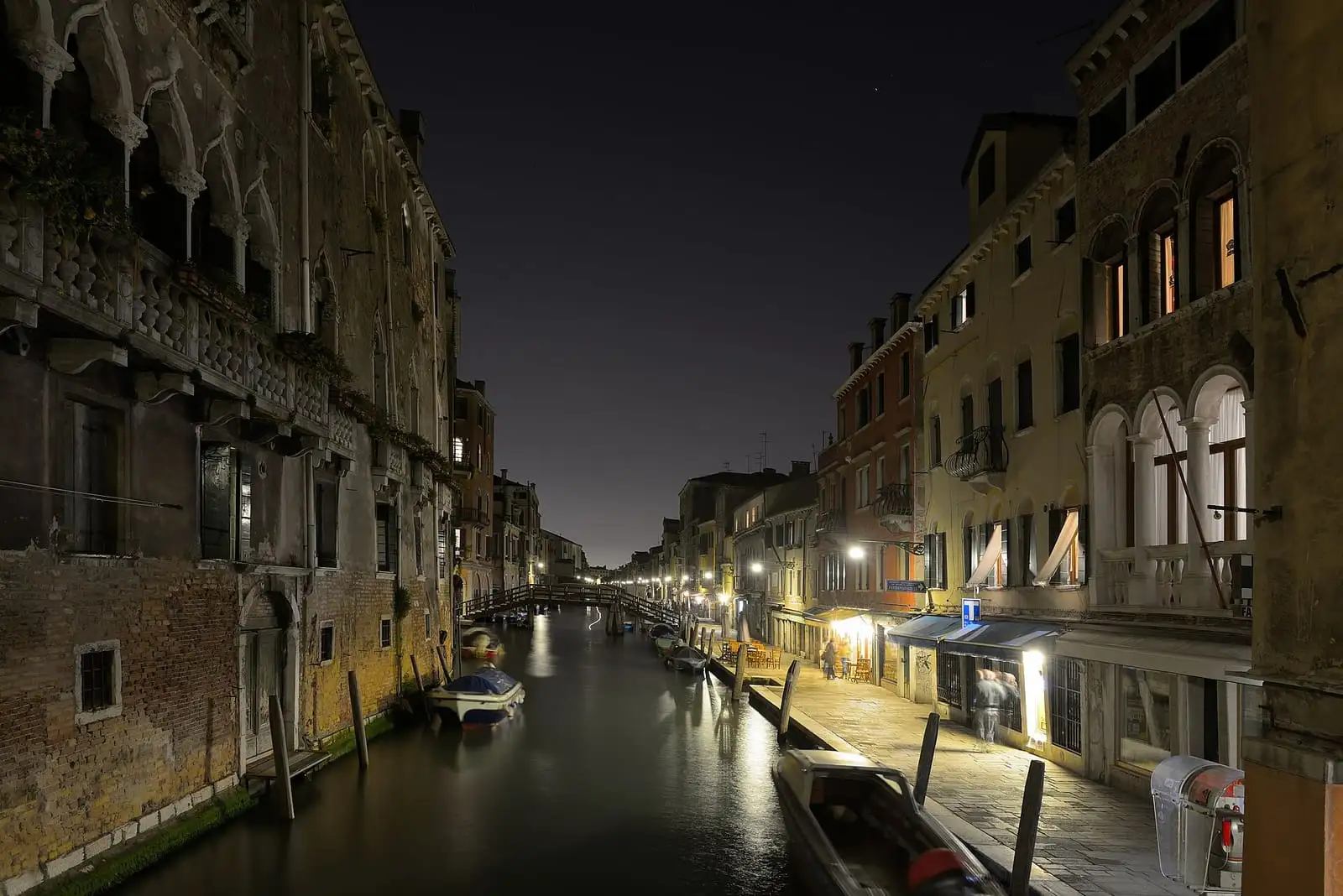
Yes, Venice is safe. Violent crime against visitors is rare, and the US State Department rates Italy at Level 2, “Exercise increased caution”, mainly because of terrorism risk. The risk you are most likely to meet is a pickpocket in the crowds at the station, Piazzale Roma, the Rialto Bridge, St. Mark’s Square and the vaporetto stops. At night the lanes are quiet and the real hazards are getting lost or slipping by a canal. In an emergency, call 112.
Travel advice, police figures, rules and fines checked on 14 November 2026.
Is Venice, Italy, safe for tourists?
Yes, for visitors who take ordinary care with their bags. The official advice for Italy points at petty theft, not violence:
| Source | What it says |
|---|---|
| US State Department (advisory updated 9 September 2026) | Level 2 of 4, “Exercise increased caution”, because of terrorism. Petty crime is common in popular tourist locations and on public transportation, and most crimes against foreigners are crimes of opportunity such as pickpocketing and purse snatching. |
| US State Department, country page for Italy | Italy has a moderate rate of crime, and violent crimes are rare. |
| UK Foreign Office | Crime levels are generally low, with more bag snatching and pickpocketing in city centers and at major tourist attractions. |
| Polizia Locale di Venezia | Its officers stopped 113 pickpockets in Venice in 2026, up to 1 November. |
Levels can change, so read the current Italy travel advisory before you fly. Enrolling in the State Department’s STEP program lets the embassy reach you in an emergency.
Pickpockets: where they work in Venice
Pickpockets in Venice work where visitors are busy with something else: buying a ticket, boarding a boat, taking a photo. The Polizia Locale’s anti-pickpocket unit patrols the main entry points to the city and the most crowded areas every day, with officers in plain clothes.
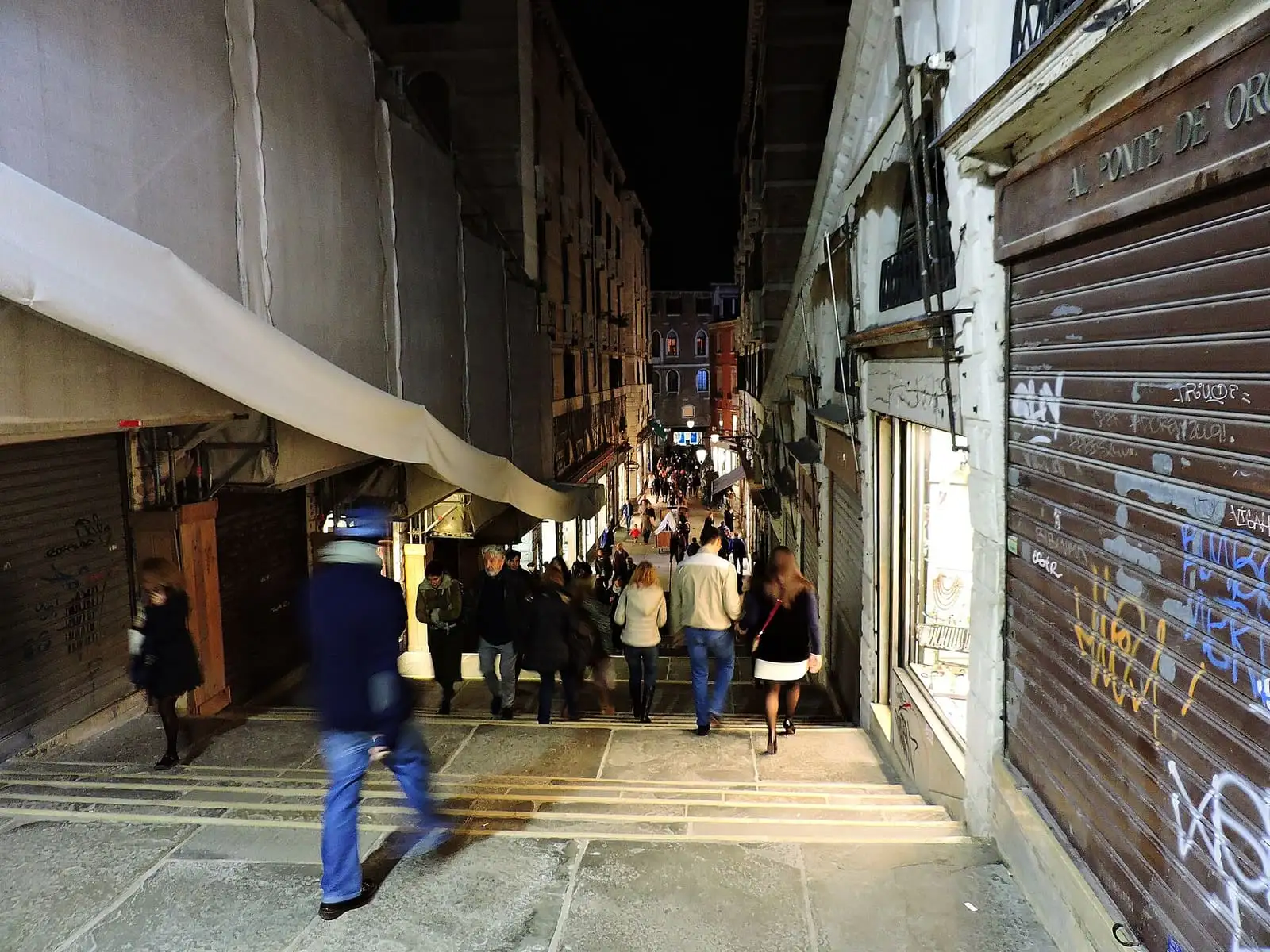

The shop-lined steps of the Rialto Bridge, one of the places where the city's anti-pickpocket officers patrol.
Four operations in the last week of October 2026 show how the thefts happen:
- At the Ferrovia vaporetto stop. A woman lifted a purse from a bag resting on top of a suitcase while an American visitor waited for her daughters to buy tickets at the machine. Her partner stood close to block the view.
- On the Rialto BridgeMap. A couple held an open umbrella to hide a hand opening a backpack while its owner looked at the view.
- At Piazzale Roma. Twice, thieves pushed into the crush boarding bus 5 to the airport and unzipped a shoulder bag and a backpack.
For the busiest periods of the year, the prefecture of Venice declares “red zones” with extra police. At Easter (3 to 12 April) and in summer (13 June to 23 August 2026) they covered Santa Lucia station and the area from the Scalzi bridge to Campo San Geremia and Piazzale Roma; the Rialto Bridge with Campo San Bartolomeo, Campo San Giacomo di Rialto and the Erbaria; St. Mark's SquareMap; and the Ponte dell'AccademiaMap. The list doubles as a map of where to keep a hand on your bag.
A few habits cover most of the risk:
- Keep your bag zipped and in front of you when you queue, buy tickets and board a boat or bus.
- Never rest a handbag on top of your suitcase.
- Keep phones out of back pockets, and away from the edge of café tables.
- If someone crowds you with an umbrella, a map or a question, step away and check your bag.
- Buy vaporetto tickets before you reach the pier, so you are not juggling a wallet in the queue. Our vaporetto guide covers fares, passes and the AVM Venezia ticket app.
Scams and overcharging: what to check
Before you pay for a boat, a guide or a souvenir, make the checks the city and the US government recommend:
- Water taxis. A licensed boat flies a yellow pennant with the words Comune di Venezia and TAXI, and the meter in the cabin must be switched on when you board. On a metered ride, a night supplement of €10 applies from 10pm to 6am. Our water taxi guide lists the city fares and how to book a fixed price.
- Gondolas. The city fare is €90 for 30 minutes by day and €110 for 35 minutes after 7pm, per gondola for up to 5 people. Agree on the price and the length of the ride before you step in. The gondola guide explains where to board.
- Tour guides. A licensed guide must always show a personal ID badge, and accompanied groups are capped at 25 people.
- Counterfeit bags. The State Department warns that tourists in Italy can be fined or detained for buying counterfeit goods, so skip the fake designer bags laid out on the ground.
- ATMs. Use a cash machine inside a bank or in a busy, well-lit spot, and cover the keypad with your hand.
Is Venice safe at night?
Yes. With no cars, the historic center goes quiet after dinner, and many side lanes are empty. What catches people out at night is the city itself.
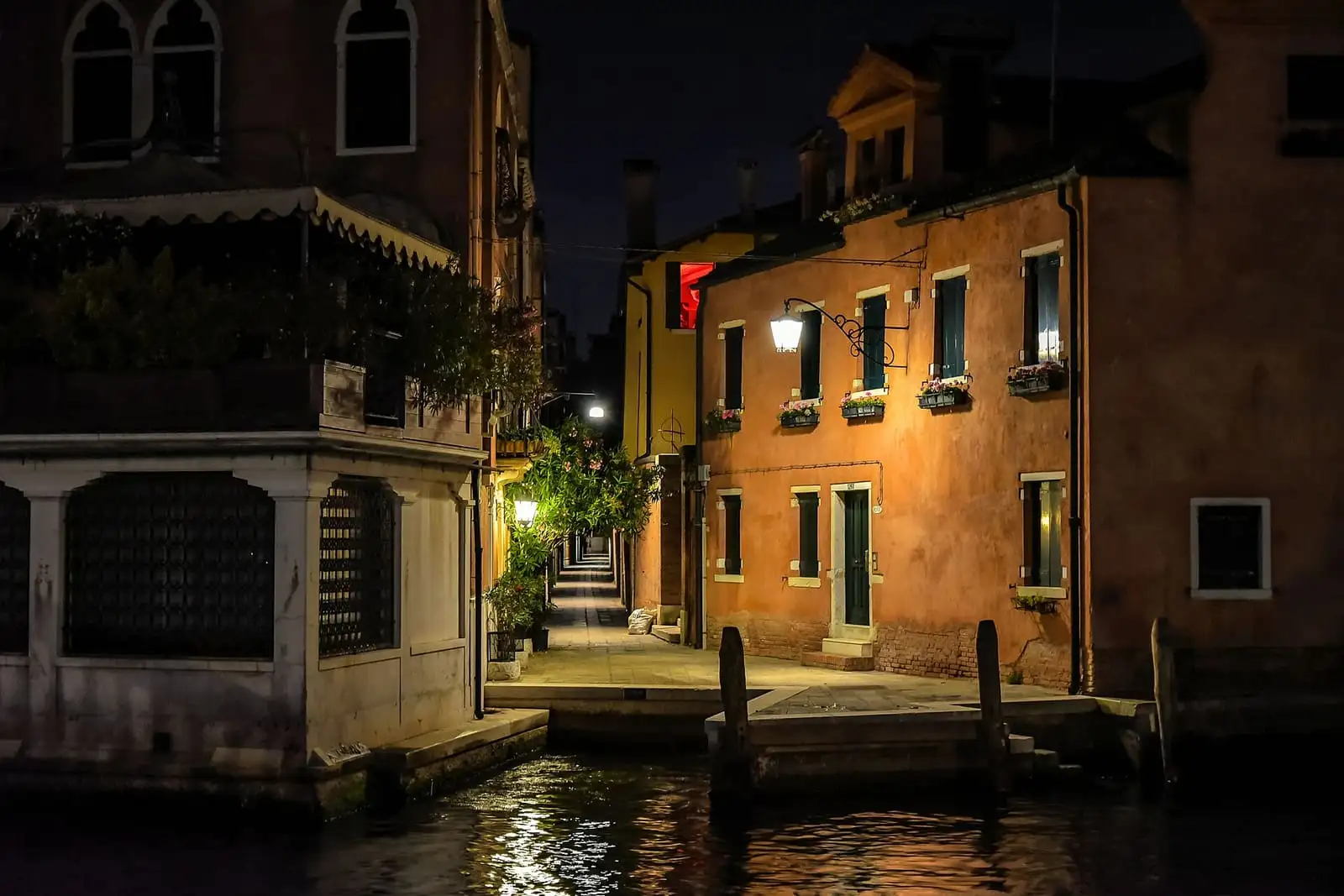

Calle San Domenico in Castello at night, seen across the Rio San Giuseppe.
- Getting lost. Lanes end at the water without warning, and house numbers run through a whole sestiere, not along a street. Keep your phone charged, save your hotel’s full address, and follow the signs painted on the walls toward Rialto, San Marco or Ferrovia. Our Venice map guide explains how addresses work.
- Canal edges and wet steps. Canal banks often have no railing, and the stone steps that lead down to the water are often wet and slippery. Keep children by the hand along the canals and on the floating piers.
- High water. From October to February a high tide can flood St. Mark’s Square and other low areas, usually in the morning. When a tide of 110 cm or more is coming, sirens sound from the bell towers. The acqua alta guide explains the tones and the city’s tide forecast.
- The last boat home. After about 11:30pm the night vaporetto line N takes over along the Grand Canal and the Giudecca Canal to the Lido, every 20 to 30 minutes, until about 5am.
If the empty lanes make you uneasy on a first evening, a guided walk gets you oriented: the Mysterious Tales of Ghosts and Murders walk takes 90 minutes through dimly lit alleys from Campo San Bartolomio to St. Mark’s Square and starts at €42. More options are in our Venice walking tours guide.
Areas to avoid in Venice
There is no official list of areas tourists should avoid in Venice, and no part of the historic center is unsafe to stay in. The red zones above are the busiest tourist spots, which tells you where pickpockets go, not where to stay away. Our guide to where to stay in Venice compares the sestieri, and you can see hotels in Cannaregio, a quieter area within walking distance of the station.
Mestre is the mainland part of the city of Venice. The streets around Mestre station, Via Piave and Corso del Popolo were also red zones at Easter and in summer 2026. Stay on busy, lit streets late at night, and read our guide to staying in Mestre for the last trains and the night buses back from Venice.
Solo, women and LGBTQ+ travelers
Venice is compact and the vaporetto runs all night, which makes it easy to get around on your own. The official advice for women is about drinks and nightlife. The State Department warns that criminals in Italy may use drugs to assault or rob, and the UK Foreign Office advises against accepting drinks from strangers or leaving a drink unattended.
If something happens:
- Call 112 for the police.
- The US Embassy in Rome encourages victims of sexual assault to contact it on +39 06 4674 1.
- 1522 is Italy’s free national helpline for violence and stalking, promoted by the Italian government’s equal opportunities department. It answers 24 hours a day, also from mobiles, and has a chat on 1522.eu.
For LGBTQ+ travelers, the State Department notes that Italy has no legal restrictions on same-sex relations and recognizes same-sex civil unions.
Rules and fines that catch visitors
Some of the fines visitors pay in Venice come from rules, not crime. The Comune’s list of forbidden behavior sets these amounts:
| Do not | Fine |
|---|---|
| Sit or lie on bridges, steps, canal banks or monuments, or eat sitting on the ground | €100 to €200, and an order to leave the area |
| Swim or dive in the canals | €350, and an order to leave the area |
| Drop litter | €350 |
| Walk around bare-chested or in a swimsuit | €250 |
| Ride or push a bicycle | €100 |
Day-trippers also need to pay the access fee on 72 days from 26 March to 15 August 2027, and inspectors fine visitors without a QR code €25 to €150. Our Venice access fee guide has the dates and the exemptions.
Crime in Venice: what the official numbers say
The Comune di Venezia publishes figures on pickpocketing, the crime that affects visitors most. On 1 November 2026 it reported that its officers had stopped 113 pickpockets in 2026: 104 were charged or arrested, and 9 minors were taken to shelters. In 2025 the number of minors and others too young to be charged had been 45, and charges against thieves caught again after being ordered to leave Venice fell from 44 to 17.
No official source publishes crime rates for visitors to Venice, or ranks Italian cities by the risk to tourists.
Is it safe to travel to Venice right now?
Yes. On 14 November 2026 the US advisory for Italy was at Level 2, unchanged since its update of 9 September 2026, and no red zones were in force in Venice: the summer ones ended on 23 August. Two things are worth checking before you travel in late autumn:
- High tides. November is the peak month for acqua alta. Check the Comune’s tide forecast the day before and pack shoes you do not mind getting wet.
- Strikes. The State Department notes that strikes often affect planes, trains and buses in Italy. Reconfirm your trains and flights the day before you travel.
What to do in an emergency or if something is stolen
- Call 112 for police, ambulance or fire, free from any phone, including US mobiles.
- The city police (Polizia Locale) operations center is on +39 041 274 7070.
- US citizens can call the US Embassy in Rome on +39 06 4674 1, the same number for emergencies. The embassy can replace a lost or stolen passport and help you report a crime.
- Report a theft to the police and keep a copy of the report for your bank and your insurer.
- Check your insurance. US Medicare does not apply overseas, and the State Department recommends insurance that covers medical evacuation.
For the rest of your planning, our guide to how many days to spend in Venice helps you plan your days, and our list of things to do in Venice has the sights to fit around your walks.
Frequently asked questions
Is Venice safe for tourists?
Yes. The US State Department rates Italy at Level 2, "Exercise increased caution", mainly because of terrorism risk, and says violent crime in Italy is rare. In Venice the problem visitors meet is pickpocketing in crowds, which the city's anti-pickpocket police unit patrols every day in plain clothes.
Is it safe to walk around Venice at night?
Yes. The historic center has no traffic and most lanes go quiet after dinner. The risks at night are getting lost, slipping on wet steps by a canal and missing the last boat, so keep your phone charged and note that the night vaporetto line N runs from about 11:30pm to 5am.
Where should you avoid staying in Venice?
No part of the historic center is unsafe to stay in. The busiest spots, such as the station area, Rialto and St. Mark's Square, are where pickpockets work and where the prefecture adds police at peak times. In Mestre, take more care around the station late at night.
Where are pickpockets most common in Venice?
At the city's entry points and in the thickest crowds. In late October 2026 the local police caught thieves at the Ferrovia vaporetto stop while a tourist waited at a ticket machine, on the Rialto Bridge and boarding the airport bus at Piazzale Roma.
Is Venice safe for solo female travelers?
The official advice for women is about drinks and nightlife. Do not accept drinks from strangers or leave a drink unattended, and keep the US Embassy number, +39 06 4674 1, and Italy's free 24-hour violence and stalking helpline, 1522, in your phone.
What is the emergency number in Venice?
Call 112 from any phone for police, ambulance or fire. US citizens can also call the US Embassy in Rome on +39 06 4674 1, a number staffed for emergencies too.
Is it safe to travel to Venice right now?
Yes. On 14 November 2026 the US advisory for Italy stood at Level 2, unchanged in its update of 9 September 2026. November is the peak month for acqua alta, so check the city's tide forecast, and check for transport strikes before a travel day.