
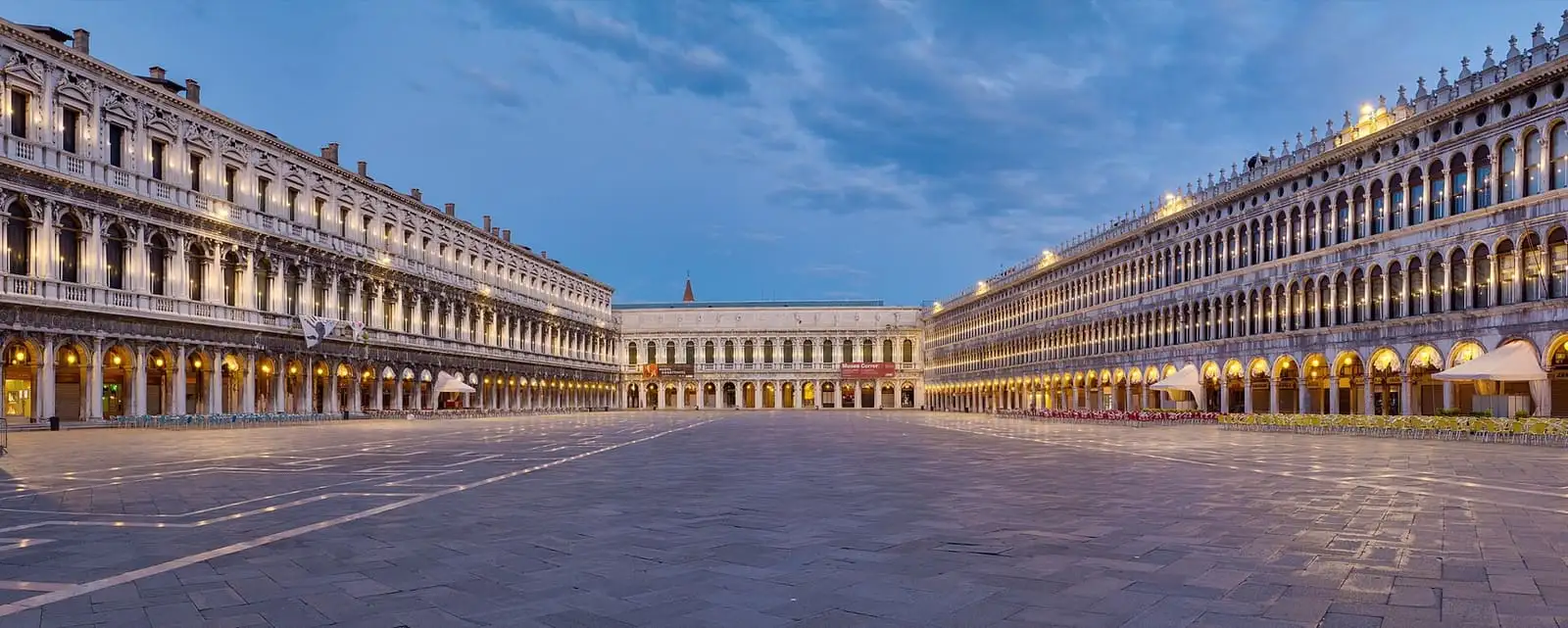
Quick answer
Plan two nights in Venice for a first trip: one full day for St. Mark’s Square and the Rialto, one for the Dorsoduro museums and Cannaregio, with early mornings and evenings after the day visitors leave. Add a third night for Murano, Burano and Torcello. A single day works, but on fee days in 2027 you pay up to €10 and see the city at its busiest.
Prices and times checked on 8 November 2026.
How many days do you need in Venice?
The historic center is small, and almost everything a first-timer wants is a walk or a short vaporetto ride apart. What decides the length of your stay is how many mornings and evenings you get, because that is when the lanes around St. Mark’s and the Rialto are quiet. Count nights, not days.
| Time in Venice | What you can see | What you give up | Best for |
|---|---|---|---|
| 1 day, no night | St. Mark’s Basilica, the Doge’s Palace, the Rialto Bridge, a Grand Canal ride | Museums in Dorsoduro, the islands, any evening | A stop between Milan and Florence, a day trip from Padua or Verona |
| 2 days, 2 nights | All of the above plus the Accademia or the Guggenheim, the Zattere, Cannaregio at night | The lagoon islands | Most first trips to Italy |
| 3 days, 3 nights | Add Murano, Burano and Torcello | Day trips to the mainland | A first trip at a slower pace |
| 4 to 5 days | Add the Lido, Padua or Verona by train | Nothing on this list | Repeat visitors and art lovers |
Two nights is the right answer for most American travelers on a first trip to Italy, where Venice shares a week or ten days with Florence and Rome. If you arrive at noon and leave at noon two days later, you still get two full evenings and two early mornings. Our Venice on a budget guide prices a three-night stay for two.
Why a day trip is the hardest way to see Venice
Day trips are popular because direct high-speed trains link Venice with Milan, Florence and Rome. The catch is that day visitors all have to arrive and leave within the same hours.
- The access fee. In 2027 Venice charges day visitors on 72 days, from 26 March to 15 August, mostly Fridays to Sundays and holidays. The fee applies from 8:30am to 4:30pm and is capped at €10 per person. In 2026, hotel guests anywhere in the municipality were exempt from arrival day to departure day. All the rules are in our guide to the Venice access fee.
- The crowds. In 2026 day visitors bought 679,553 paid passes over 60 fee days, and 25,471 of them were for Saturday 2 May alone. Day visitors come and go within the day, so St. Mark’s Square and the Rialto are most crowded at midday.
- The math. On a fee day, a couple on a day trip pays up to €20 in fees. The same couple sleeping in a 3-star hotel in the historic center pays €7 a night in tourist tax and no access fee.
- The distance. From Rome a day trip means about 4 hours on the train each way. The first direct Frecciarossa from Roma Termini on a weekday in late November 2026 left at 5:35am and reached Santa Lucia at 9:34am.
If one day is all you have, the plan below gets the essentials done. If you can, move one night of your trip to Venice. On a cruise stop, our cruise port guide shows what fits in 4, 6 or 8 hours.
One day in Venice: a plan with times
This plan starts with a train into Venezia Santa Lucia at about 9:30am. On a weekday in late November 2026, the 7:15am Frecciarossa from Milano Centrale arrived at 9:44am and the 7:20am from Firenze Santa Maria Novella at 9:34am. Book your St. Mark’s Basilica tickets before you travel: €10 for a timed slot on the official site, tickets.basilicasanmarco.it. Do not plan this day on a Sunday, when the church opens to visitors only at 2pm.
Book St. Mark’s Basilica tickets9:45am: down the Grand Canal. Tap a contactless card on the validator at the Ferrovia stop, outside the station, and take line 1 toward San Marco. It reaches Rialto in 19 minutes and calls at almost every stop along the canal. A single ride costs €9.50, and our vaporetto guide explains when a day pass pays off.
10:15am: the Rialto. Get off at Rialto, cross the Rialto BridgeMap (our Rialto Bridge guide has the viewpoints), and walk through the stalls of the Rialto MarketMap on the San Polo side. Then wind through the lanes to St. Mark’s Square.
11:30am: St. Mark’s Basilica. Use your timed slot at St. Mark's BasilicaMap. Visits are short, with up to 20 minutes in the church, so you are back on Piazza San MarcoMap before noon. If you want a guide inside, look at guided tours of the Basilica and check that the listing includes the entry ticket.
12:15pm: the Doge’s Palace. The Doge's PalaceMap ticket costs €35, or €30 if you buy it online at least 30 days ahead, and also covers the Museo Correr across the square. From November to March the palace is open 9am to 6pm, last entry 5pm, and from April to October until 7pm, last entry 6pm. The visit ends in the prisons, which you reach through a corridor of the Bridge of SighsMap. Our Doge’s Palace tickets guide covers the tours and the Secret Itineraries.
Book Doge’s Palace tickets2:30pm: late lunch, then Dorsoduro. Walk west to the Accademia bridge and cross into Dorsoduro, or cross the Grand Canal on the traghetto at San Tomà, a working gondola that costs €2 and runs from 8:30am to 6pm in winter.
5pm: a gondola, or the view. The city fare for a gondola is €90 for 30 minutes until 7pm and €110 for 35 minutes after 7pm, per boat for up to five people. The gondola ride guide lists the official stations. If you skip it, the bell tower of St. Mark'sMap costs €15 and stays open until 7:15pm in winter.
7pm: back to the station. Lines 1 and 2 take you from Rialto back to the Ferrovia stop. On a weekday in late November 2026, the last direct Frecciarossa left Santa Lucia at 7:26pm for Florence and Rome and at 7:48pm for Milano Centrale.
Two days in Venice: the classic first visit
With two nights you can put the big sights first thing in the morning, before the day visitors arrive, and keep the evenings for walking.
Day 1: St. Mark’s and the Rialto
Book the 9:30am slot at the Basilica, the first of the day from Monday to Saturday, and get to the square early, before the day visitors. Go into the Doge’s Palace afterward, since it stays open later than the church. The bell tower is next, for the view over the roofs and the lagoon.
Book St. Mark’s Basilica ticketsIn the afternoon, walk to the Rialto Bridge and lose an hour in San Polo on the far side. At dusk, take line 1 from Rialto back down the Grand Canal to San Marco, then walk east along the waterfront.
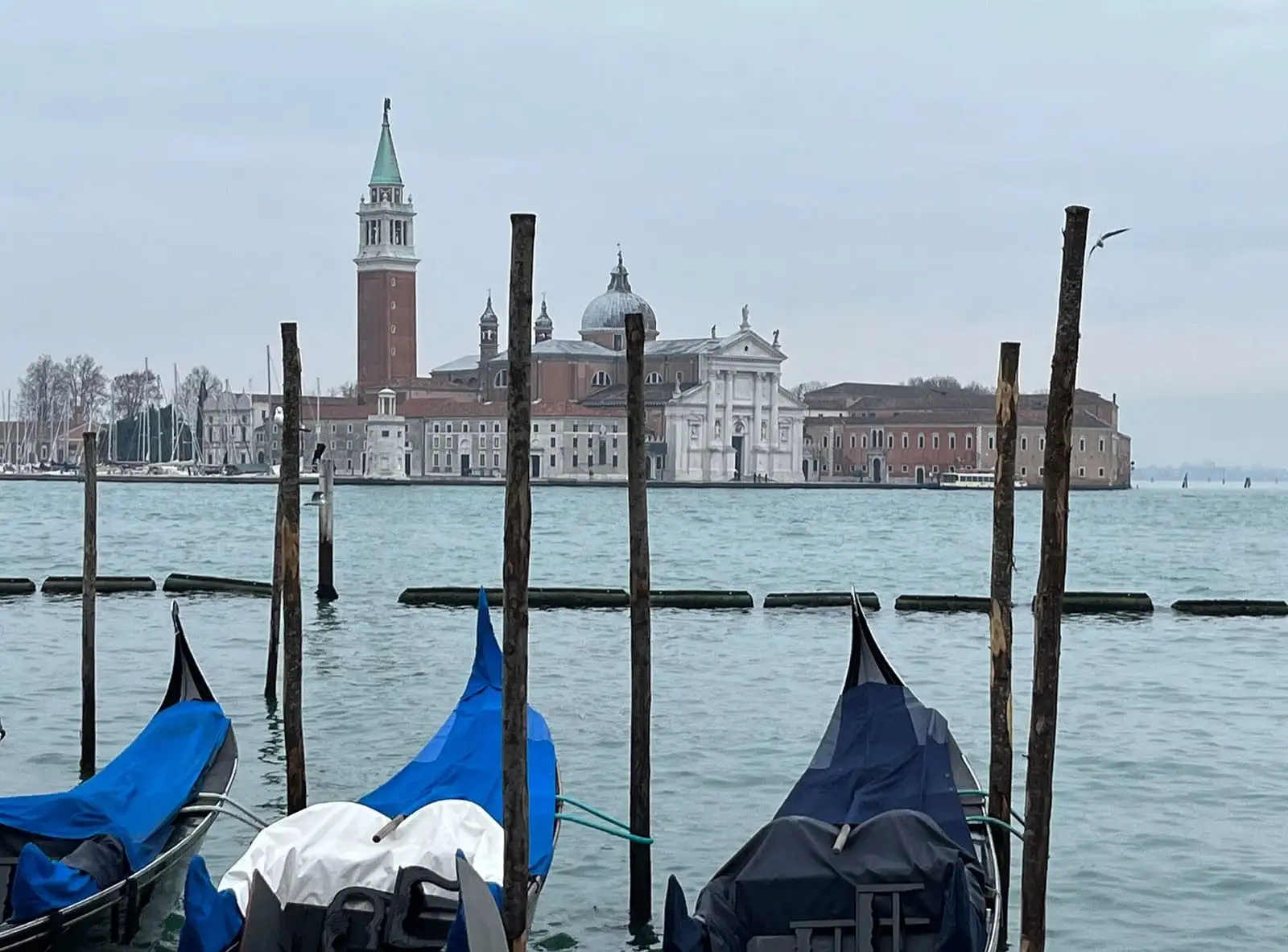

San Giorgio Maggiore across the water from the Riva degli Schiavoni, the waterfront east of St. Mark's Square.
Day 2: the Dorsoduro museums and Cannaregio
Start with one of the two big art museums of Dorsoduro: the Gallerie dell'AccademiaMap for Venetian painting, or the Peggy Guggenheim CollectionMap for modern art (how to visit). Both are a short walk from the Accademia stop on lines 1 and 2.
| Museum | Hours | Ticket | Closed |
|---|---|---|---|
| Gallerie dell’Accademia | 9am to 7pm, ticket sales end at 6pm | €15, under 18 free | Open Tuesday to Sunday; check the museum’s calendar for other closures |
| Peggy Guggenheim Collection | 10am to 6pm, last entry 5pm | €17 | Tuesdays and 25 December |
From the Accademia, walk along Rio di San Trovaso to the Squero di San TrovasoMap, one of the few yards in Venice still building and repairing gondolas. Continue to the Zattere, the long waterfront on the Giudecca canal, for a coffee in the sun.
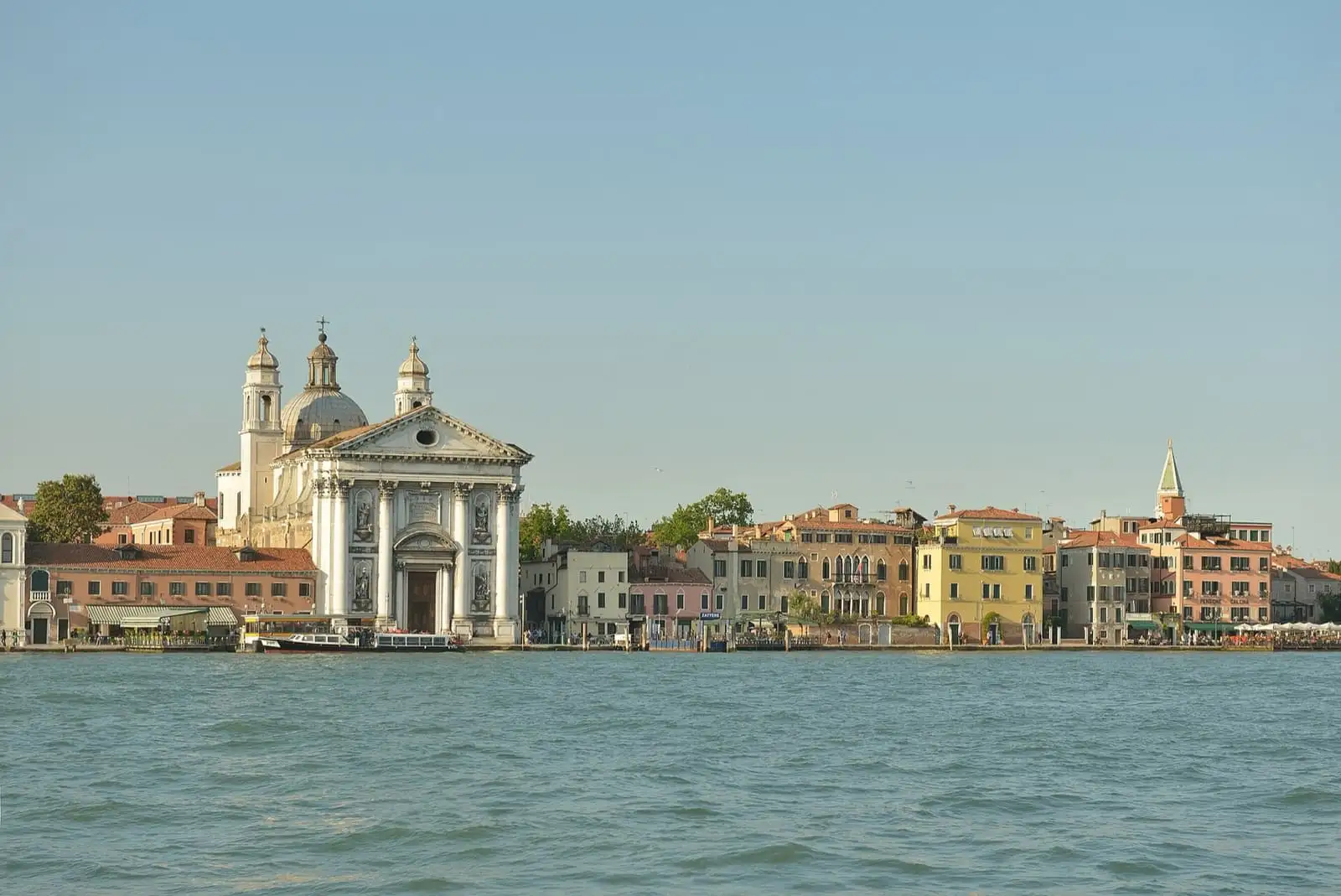

The Gesuati church on the Zattere waterfront in Dorsoduro, seen from the Giudecca canal.
Keep your Basilica ticket on your phone today. Since July 2025, any St. Mark’s Basilica ticket also gets you into about 35 other churches and sites within six months of purchase. Two of them are on this walk: the Gesuati churchMap on the Zattere, and the church of San SebastianoMap further west. Walk back past the Salute churchMap at the tip of Dorsoduro.
In the late afternoon, take the vaporetto to Cannaregio, the quieter northern district. The church of Madonna dell'OrtoMap is on the same Basilica ticket. Stay in Cannaregio for dinner: its evenings are quieter than St. Mark’s.
Three days in Venice: add the lagoon islands
The third day goes to the islands: glass on Murano, lace and painted houses on Burano, and the cathedral on Torcello. Our guide to Murano and Burano has the glass furnaces, the museums and a half-day option.
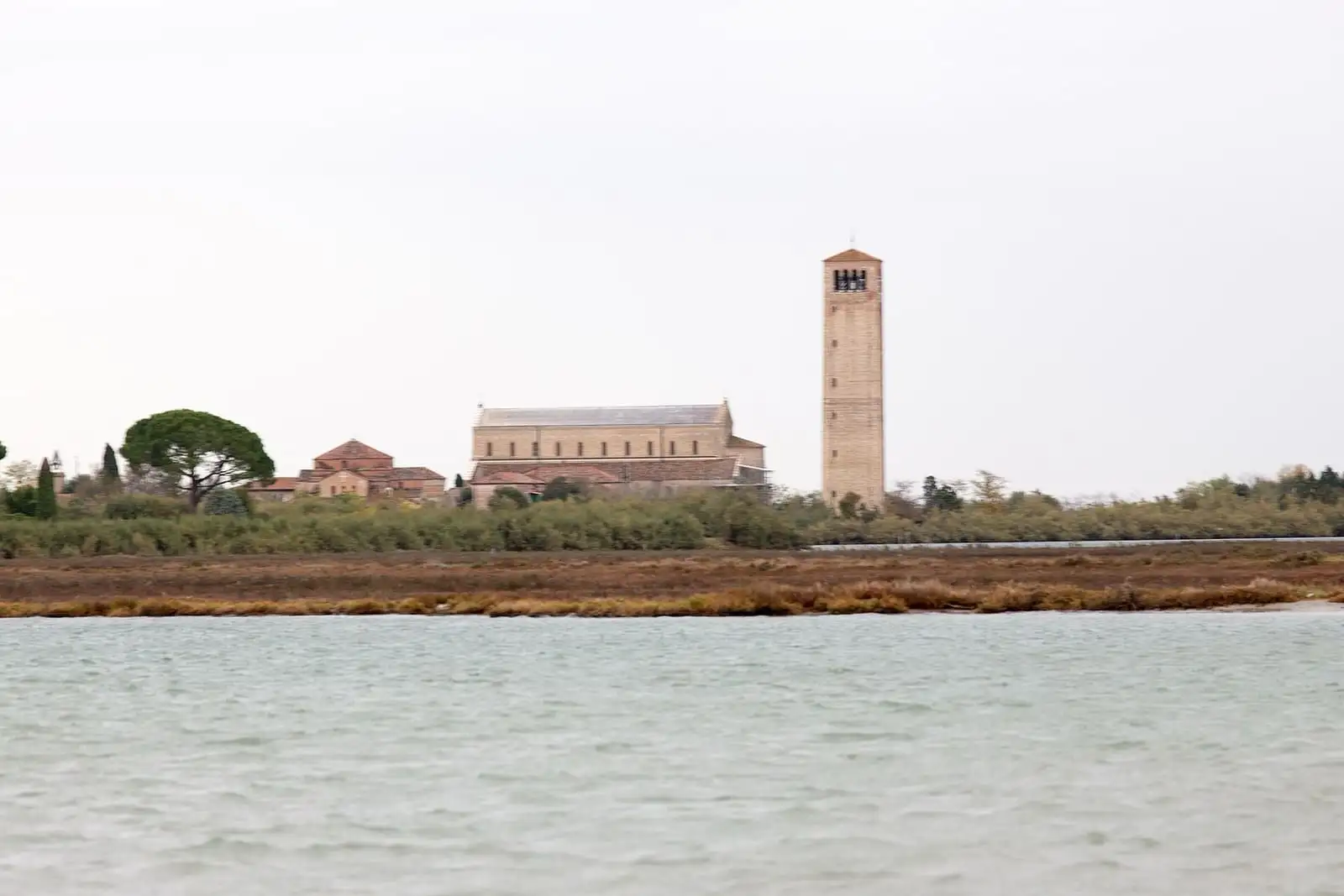

The cathedral of Santa Maria Assunta and its bell tower on Torcello, seen across the northern lagoon.
The order that works:
- Morning, Murano. Line 3 leaves Piazzale Roma every 30 minutes, stops at the Ferrovia, and reaches Murano Colonna 21 minutes after leaving.
- Late morning, Burano. From Murano Faro, take line 12, which runs every 30 minutes from Fondamente Nove to Burano in about 40 minutes.
- Afternoon, Torcello. Some line 12 runs stop at Torcello: check the panel at the stop. Your Basilica ticket gets you into the Cattedrale di Santa Maria AssuntaMap within six months of purchase.
A day like this takes four or more boat rides, so buy passes. Three days of vaporetto cost €45 with the 72-hour pass, which pays for itself from the fifth ride. If you only tap a contactless card, ACTV caps your charges at the same pass prices.
Four or five days: is it too long?
Five days in Venice is too long only if you stay around St. Mark’s. With four or five days, use the extra time outside the center on one of the day trips from Venice:
- The Lido. Line 1 continues past San Marco to the Lido, the long beach island that closes the lagoon.
- Padua. Regional trains from Santa Lucia take 27 to 28 minutes and cost €5. The Frecciarossa takes 26 to 28 minutes, with fares from €9.90.
- Verona. The Frecciarossa reaches Verona Porta Nuova in 1 hour 12 minutes, with fares from €10.90 on a weekday in late November 2026. The regional train takes 1 hour 28 minutes for €10.55. Our Venice to Verona train guide has the timetable and a day plan.
- The Prosecco hills. A Prosecco wine tour in the hills north of the city takes 6 to 7 hours from Piazzale Roma, with tastings at family wineries.
- The Dolomites. With four days or more, a long day trip to the Dolomites is possible.
Keep your hotel in Venice and do these as day trips. If you sleep in Padua or Verona instead, you count as a day visitor in Venice and pay the fee on 2027 fee days.
How Venice fits a 7 or 10 day Italy trip
Venice connects by direct high-speed train to Milan, Florence and Rome, which makes it an easy first or last stop. These are the times for Tuesday 24 November 2026 on the Trenitalia and Italo booking sites:
| From Venezia Santa Lucia to | Fastest direct train | Direct trains that day | Cheapest regional option | Book |
|---|---|---|---|---|
| Padua | 26 minutes (Frecciarossa) | Regional trains every 30 minutes, plus high-speed trains | €5, 27 to 28 minutes | See trains |
| Verona Porta Nuova | 1 hour 11 minutes (Frecciarossa) | Hourly regional trains, plus high-speed trains | €10.55, 1 hour 28 minutes | See trains |
| Milano Centrale | 2 hours 27 minutes (Frecciarossa) | 23: 18 Trenitalia, 5 Italo | €22.40 with a change in Verona, about 3 hours 30 minutes | See trains |
| Firenze Santa Maria Novella | 2 hours 13 minutes (Frecciarossa) | 14 Frecciarossa, plus Italo | None worth taking | See trains |
| Roma Termini | 3 hours 56 minutes (Frecciarossa) | 14 Frecciarossa, plus Italo | None worth taking | See trains |
The usual route for a first trip runs from north to south: fly into Venice, take the train to Florence and then Rome, and fly home from Rome. Book two one-way flights or a multi-city ticket so you don’t backtrack.
7 days in Italy: 2 nights in Venice, 2 in Florence, 3 in Rome.
10 days in Italy: 3 nights in Venice, 3 in Florence, 4 in Rome. If Milan is in the plan, take a night each from Florence and Rome for it.
Our train guides cover each leg in detail: Milan to Venice, Florence to Venice and Rome to Venice. For the trip back to Milan, Trainline shows Trenitalia and Italo together.
When to go and which days to avoid
- Fee days. On the 72 fee days of 2027, from 26 March to 15 August, day visitors pay from 8:30am to 4:30pm. Under the 2026 rules a night in Venice exempts you, and the early morning comes before the fee hours.
- Sundays. St. Mark’s Basilica opens to visitors only at 2pm. Put the Doge’s Palace and the islands on Sunday morning instead.
- Tuesdays. The Peggy Guggenheim Collection is closed, so take the Accademia that day.
- Carnival. From 23 January to 9 February 2027 the city is at its busiest in winter, and hotel rates rise. See our Venice Carnival guide.
- Winter. There are no fee days between now and 25 March 2027. Our guide to Venice in winter covers acqua alta and the weather.
Where to stay for two or three nights
For a short stay, sleep as close to the Rialto or the Accademia bridge as your budget allows, so you can walk to St. Mark’s before the day visitors arrive. Our guide to where to stay in Venice compares the areas, and the best hotels in Venice are sorted by budget and type. To compare dates, browse hotels in Venice on Booking.
Budget for the tourist tax as well: in the historic center it is €3.50 per person per night at a 3-star hotel and €4.50 at a 4-star, for up to five nights.
For the rest of your planning, from the access fee to what to book before you fly, see our Venice travel guide.
Frequently asked questions
Is 2 days in Venice too long?
No. Two days give you St. Mark's Basilica, the Doge's Palace and the Rialto on one day and the Dorsoduro museums and Cannaregio on the other, plus two evenings after the day visitors leave. Add a third day only if you want Murano, Burano and Torcello.
Is 3 days in Venice too much?
Not if you spend the third day on the lagoon. Line 12 reaches Burano from Fondamente Nove in about 40 minutes, and any St. Mark's Basilica ticket also gets you into the cathedral on Torcello within six months of purchase.
Is one day in Venice enough?
It is enough for St. Mark's Basilica, the Doge's Palace, the Rialto Bridge and a vaporetto ride on the Grand Canal, if you book the Basilica slot ahead. On the 72 fee days of 2027, between 26 March and 15 August, day visitors pay an access fee of up to €10 from 8:30am to 4:30pm.
Is 5 days in Venice too long?
Only if you stay in the San Marco area. With five days, add the Lido and day trips by train to Padua, 27 minutes away on a €5 regional train, or Verona, 1 hour 12 minutes away on the Frecciarossa.
Should I stay overnight in Venice or do a day trip?
Stay at least one night. In 2026 hotel guests were exempt from the access fee from arrival day to departure day, and the tourist tax at a 3-star hotel in the historic center is €3.50 per person per night. You also get the city before 8:30am and after 4:30pm, outside the fee hours.
What is the best month to go to Venice?
For fewer day visitors, pick a month without access fee days. In 2027 the fee applies only between 26 March and 15 August, so October, November and early March are free of it, while Carnival fills the city from 23 January to 9 February 2027.
How long is the train from Venice to Rome and Florence?
On a weekday in late November 2026, the direct Frecciarossa from Venezia Santa Lucia took 2 hours 13 minutes to Firenze Santa Maria Novella and 3 hours 56 minutes to 4 hours 7 minutes to Roma Termini. Italo also runs direct trains on both routes.